The SAP Certified - Project Manager - SAP Activate certification confirms knowledge of project management in SAP implementation environments. The current certification code is C_ACT_2604. It includes SAP Activate methodology, project delivery, governance, Agile techniques and pragmatic decision-making.
Preparation for this certification is not just memorizing definitions. Candidates should be able to relate SAP Activate concepts to practical project situations. The Exam Questions is a great resource site to practice additional exam questions, besides official materials.
This guide covers the current exam details, important topics, official educational journey, registration process, 6-week study plan, and retake rules. It also contains practical tips to help you prepare better.

Official C_ACT_2604 Exam Details
|
Item |
Current Details |
|
Official certification title |
SAP Certified - Project Manager - SAP Activate |
|
Certification code |
C_ACT_2604 |
|
Assessment format |
Scenario-based assessment |
|
Assessment activities |
1 activity |
|
Duration |
120 minutes |
|
Cut score |
60% |
|
Language Available |
Roleplay with AI guidance: Roleplay with AI guidance: English, Spanish, Italian, French, Japanese +25 more Video recording: English only |
|
Certification validity |
12 months |
|
Relevant roles |
Project Manager and Consultant |
C_ACT_2604 is a practical assessment format. So, candidates should be ready for project-related situations and practical decisions. SAP may change certification formats, policies, and access requirements.
For the most up-to-date exam requirements and certification updates, consult the official SAP certification page.
What Is the C_ACT_2604 Exam and Why Is It Important?
The C_ACT_2604 exam is SAP-specific project delivery knowledge. It is focused on the implementation project application of the SAP Activate methodology. The exam is created to test knowledge in structured approaches to project planning, governance, workstreams, and transitions. It also integrates the implementation tools with Agile project delivery methodologies. This knowledge adds SAP-specific methods to the general skills of project management.
This exam is meant for professionals who are working in SAP implementations and transformations. It enables the candidates to comprehend how the decisions made on the project impact the timelines and how they impact the stakeholders, risks and delivery results.
The C_ACT_2604 practice exam is very important to get practical knowledge. Each case should be evaluated separately before taking any recommendation. Think about project priorities, dependencies, stakeholders, and expected outcomes.
- Quick Tip: Match each C_ACT_2604 exam topic to an actual SAP project.
- Warning: Do not just memorize the terms, but apply them in practice.
Understanding the New C_ACT_2604 Exam Format
The C_ACT_2604 exam currently uses a scenario-based assessment approach. Candidates complete one assessment activity within the available time. The assessment duration is currently 120 minutes, with a listed cut score of 60%.
This format requires a different preparation strategy from older examinations. Candidates should understand how concepts influence actual project decisions. Reading definitions remains useful, but practical application is equally important.
Suppose a major project requirement appears during implementation. Don’t just refer to it as a scope problem. Consider impact on timelines, resources, stakeholders, governance, and delivery. You can practice these scenarios and find the gaps in your knowledge by using the relevant C_ACT_2604 study material along with the official SAP materials.
The best way to respond is with action, reason, and an expected outcome. First describe the action you are suggesting. Then tell why the action is right for the situation. Finally, describe the expected outcome of the project. This structure helps to ensure that responses to the scenario are clear and appropriate
- Pro Tip: Practice explaining project decisions aloud before your assessment.
- Warning: Do not depend entirely on older multiple-choice preparation strategies.
Benefits of the C_ACT_2604 Certification
The certification can offer practical value for relevant SAP professionals. However, a certification alone does not guarantee employment or promotion. Its value is relative to your skills, experience, and direction in your career.
1. Builds SAP-Specific Project Knowledge
- General project management does not cover all SAP implementation requirements. SAP Activate provides you with a structured approach to run implementations and transformations. The certification is useful to link project management to SAP delivery practices.
2. Improves Real-world Decision-making
- Candidates are asked to think about consequences in scenario-based preparation. You learn the stakeholders, risks, dependencies, and results of the project. These skills can build up your overall approach to project management.
3. Provides Project Management and Consulting Support
- Certification is for Project Managers and consultants. It can also support implementation leads and transformation professionals. The knowledge could be helpful for professionals leading cross-functional SAP teams.
4. Strengthening SAP Activate Understanding
- SAP Activate is a framework that leads you through the implementation activities. Understanding of methodology aids communication between project teams. It also helps professionals to understand the responsibilities of the project and interdependencies.
Key Areas to Cover for C_ACT_2604
The safest approach is to follow the official certification scope and SAP learning content. The scenario-based format also makes practical project judgment important.
|
Topic Areas |
Priority |
What to Focus On |
Tips / Warnings |
|
SAP Activate Foundations and the 3 Pillars |
Critical |
Learn methodology, tools, and accelerators for SAP implementation. |
Tip: Get this foundation in place before the advanced topics. |
|
Workstreams, Deliverables, and Governance |
Critical |
Study responsibilities, deliverables, governance, planning, and project controls. |
Warning: Be aware of the dependencies between workstreams. |
|
SAP Cloud ALM and Implementation Tools |
High |
See how tools can help you plan, track, test and implement activities |
Tip: Focus on how to use it. |
|
Agile Project Planning |
High |
Priorities, increments, backlogs, planning, and the rhythm of delivery are all key elements. |
Tip: Know the impact of planning on project control. |
|
Agile Delivery, Backlog, Sprints, Release Management. |
Critical |
It is specialized in backlog management, sprints, iterations, releases, and testing. |
Warning: Don’t learn agile terms unless you know what it means. |
|
Transition Paths and Ways of Implementation |
Critical |
Compare cloud, private cloud, on-premises, conversion, and transformation scenarios |
Tip: Pay attention to the timing of different approaches. |
|
Stakeholder, Change, Testing, and Quality Management |
High |
Learn communication, change, testing, readiness, adoption, and quality. |
Warning: Consider the wider impact of the project for every decision. |
|
Project execution and scenario-based decision-making |
Critical |
Apply concepts to real situations and competing priorities of projects. |
Tip: Always think about risks, dependencies, expected outcomes. |
The most frequently asked questions about preparation are addressed in the C_ACT_2604 FAQ .
- Quick Win: Study and practice more work streams, transition paths, and scenario-based practices.
Official Project Manager - SAP Activate Learning Journey
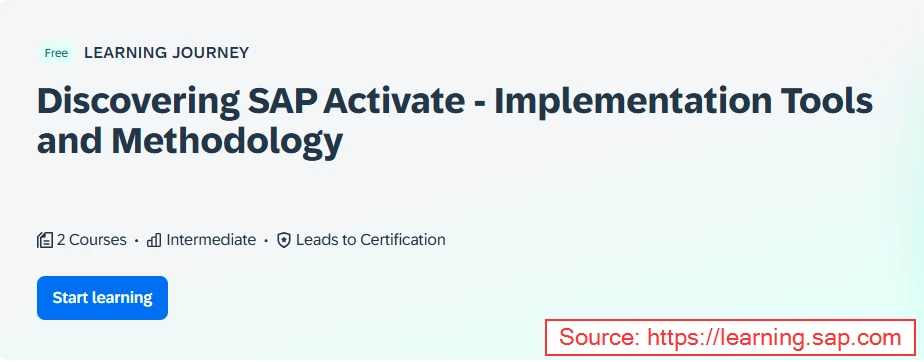
The official Project Manager - SAP Activate learning journey should be your main preparation foundation. It covers SAP Activate methodology and Agile project delivery. The learning path also includes practical activities that support applied understanding.
Start with a course on implementation methodology, then take agile delivery. This sequence helps you understand the broader SAP Activate framework first.
|
Course Name and Official Source |
Code |
Main Content |
Approx. Time |
What It Covers |
|
Discovering SAP Activate - Implementation Tools and Methodology |
ACT100 |
SAP Activate, methodology foundations, clean core, integrated toolchain, workstreams, transition paths, SAP support |
9 hr 25 min |
Core SAP Activate implementation methodology |
|
ACT200 |
Agile, Scrum, project setup, backlog creation, iterative builds, testing |
5 hr 40 min |
Agile delivery within SAP projects |
|
|
Practical Exercise |
- |
Applied project situations and practical activities |
Varies |
Reinforces scenario-based understanding |
The first course builds your general foundation of methodology. It explains how SAP Activate supports the implementation activities. It also introduces transition paths, work streams, a clean core, and implementation tools.
An agile course is about iterative project delivery. Candidates will learn about Agile principles, Scrum, backlog management, releases, sprints, and testing/deployment activities.
The practical exercise should not be viewed as extra content. It can help you see the difference between the theory itself and its application.
- Quick Win: Get to grips with the methodology before a major Agile overhaul.
- Warning: Don’t overlook workstreams because they look simple at the onset.
Who Should Take the C_ACT_2604 Exam?
C_ACT_2604 is designed for professionals in SAP project delivery. This certification is a win for experienced project professionals and those moving into SAP-focused roles.
This certification is for you if you work on:
- SAP implementation projects
- SAP transformation projects
- Coordination & Project Management
- SAP Consulting Projects
- Delivery teams spanning functions
- Business & technical stakeholders
- SAP S/4HANA implementations
- Cloud transformation programs
- Project quality activities and risks
- Agile, hybrid project settings
For general project managers with experience, knowledge of SAP-specific methodology may be useful. SAP consultants can also understand the implementation delivery better.
For purely technical specialists the certification may be less relevant. However, there is a benefit for technical professionals as they start to move into leadership roles.
- Tip: Choose this certification because it aligns with your professional goals.
How to Register for the C_ACT_2604 Exam?
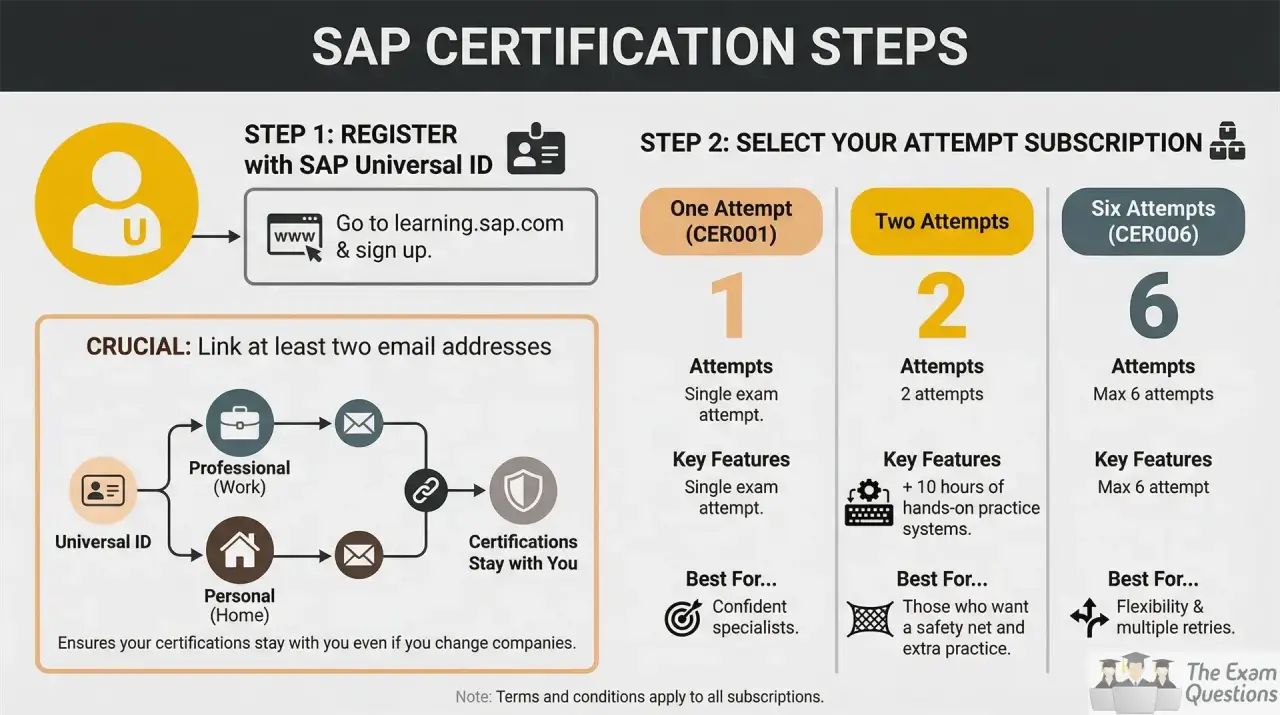
- To access, first you have to sign in with your SAP Universal ID.
- Then, it's mandatory to have either an SAP Learning Hub subscription or an exam attempt that you bought.
- Review the details of the C_ACT_2604 exam website.
- Click “Go to Certification Exam” and then start your assessment.
- Warning: Once you launch the assessment session, the timer runs continuously and cannot be paused, reset, or restarted under any circumstances.
6-Week Study Plan for the C_ACT_2604 Exam
Week 1: Establish your foundation
- For the 1st week, start by getting all required information, official certifications, and all details of training procedures. Then, understand how to use the assessment format. Do not start intense preparation. Then you can begin the SAP Activate implementation tools and methodology course. Pay attention to the purpose of the methodology. Understand how structured activities support delivery of implementation. Write short notes in your own language.
Week 2: Governance Studies & Workstreams
- Keep the methodology course but work stream focused. Comprehend the dependencies and coordination between different teams and their responsibilities. This week you will learn about the governance and decision-making processes for study projects. Consider how problems escalate through processes. Identify the key decision-making stakeholders.
Week 3: Transition Tools
- Discover the tools of SAP Cloud ALM and SAP Integrated Toolchain. And focus on basics and different project opportunities as well.
Week 4: Understanding Agile Project Delivery
- This week, pay close attention to the course on Agile Project Delivery. To begin, learn the basics of both Scrum and Agile. Once you fully understand these ideas, move on to exercises that you can actually do. Then get down with iterative builds, release planning, sprint cycles, and testing. Don’t learn Scrum terminology for the sake of learning it. Practice applying it to real SAP project scenarios.
Week 5: Practice Scenario-Based Answers
- Take some time in the 5th week to review your notes and identify any weaker topics. Make realistic scenarios for risks. You can also create scenarios on stakeholders, delays and quality issues. First, find the project problem in each case. Then think about stakeholders and dependencies. Finally, make a recommendation and tell what you expect to see. Whenever you need accurate clarifications, refer to the official SAP learning and C_ACT_2604 PDF questions for your practice
Week 6: Review and Simulate
- Do not introduce major new topics in the final week. Focus on your problem areas, and work on them. Practice scenarios with a realistic time frame.
Tip: Please keep your notes tidy and easy to read. Review of methodology, work streams, governance, Agile delivery, and transition paths.
Retake Rules for SAP Certified - Project Manager - SAP Activate
Retake policies change and so do SAP certification formats. Therefore, always check current SAP guidance before attempting again.
On scenario-based assessments:
- You can take the same certification exam up to four times within a 12-month period.
- You have to wait 24 hours between exam attempts.
- SAP allows you to retake the assessment immediately if you fail and still have time left on the exam clock. This is considered one exam attempt.
- If you do not pass four attempts, you must wait 12 months from your last attempt to be eligible to take the certification exam again.
Important Exam-Day Tips
- Even the best preparation suffers from poor time management. Hence, make a simple assessment plan in advance of the examination day.
- Do not immediately respond to familiar terminology. First, define the real project problem. Then think about the relevant stakeholders and dependencies.
- The decision on a project often impacts many teams and activities. Think about the scope, timeline, quality, risks, and governance before answering.
- Use the format of action, reason, and expected result. What would you do? Why? Then explain how your decision contributes to project delivery.
- Long answers are not necessarily strong ones. In the case of the project situation, the focus is on information that is directly relevant to it. Clean logic is better than needless complication.
- Don’t overspend time getting one response perfect. Continue with the assessment, and keep your reasoning clear.
You can use C_ACT_2604 free questions as additional scenario practice before the assessment. They may support your revision.
Keeping C_ACT_2604 Certification Valid
The current validity of certification is 12 months. SAP may offer a maintenance process for qualified certified professionals. The precise requirements can change over time.
Don’t wait until the week before certification expires. After you get your certification, set a reminder. Check the current maintenance requirements several months before the deadline.
That way you’ll have time to get done with whatever you have to do. It also helps in avoiding missing important maintenance windows.
To meet these annual criteria, SAP Learning Hub holders can take a non-proctored "stay certified" assessment with unlimited attempts. Without a subscription, you must buy and repeat the whole certification exam every year. If an exam is withdrawn, active badge holders will automatically receive a 12-month extension without evaluation.
Conclusion
C_ACT_2604 requires practical understanding of SAP Activate and project delivery. Start with the official SAP learning journey and focus on methodology, workstreams, governance, risks, transition paths, and Agile delivery.
Apply each idea to a real-life project. You can also use a C_ACT_2604 scenario questions test for more practice. This will help you to test yourself before the exam. Getting ready for C_ACT_2604 is easy when you study systematically and practice regularly with examples from everyday life.
Boost Your C_ACT_2604 Preparation With These Resources:
C_ACT_2604 FAQ | C_ACT_2604 free questions | C_ACT_2604 study material | C_ACT_2604 free questions | C_ACT_2604 scenario questions

![Master SAP Activate Project Management with Free C_ACT_2604 Practice Questions [2026]](https://theexamquestions.com/uploads/blogs/C_ACT_Free_questions.webp)