Here’s the real story about SAP certifications: They’ll get your resume looked at, but that’s about it. You don’t get hired just because you passed an exam.
I’ve seen this play out again and again. New SAP consultants show up to interviews full of confidence, certificate in hand, then freeze up when the questions turn practical. Sure, the cert proves they studied, but can they actually deliver when it counts? That’s the gap we’re fixing today.
In this guide, you’ll see how SAP professionals who pair certifications with hands-on experience pull in 20–40% higher salaries. I’ll show you how to build the kind of project experience employers can’t ignore, and lay out exactly how to achieve SAP mastery that holds up, no matter how the cert landscape changes.

The Certification Paradox: Why a Certificate Isn’t Enough
Here’s what’s going on:
A certification shows you know the theory. Doing real work shows you can actually execute.
Recent stats say more than half of SAP pros now hold at least one certificate, and the bar for entry keeps rising. Still, check out what else the market tells us:
- Certified SAP professionals make 20–40% more than those without certs.
- But certification doesn’t get you hired.
- Employers are increasingly looking for real project experience, not paper credentials.
- SAP is turning its certifications into performance-based exams that mimic real scenarios (coming November 2025).
Think of your certification as your driver’s license. It means you passed the test, but actual driving keeps you safe on the road.
What Employers Really Want: The Skills Gap
Here’s what I keep hearing from SAP hiring managers:
They aren’t looking for “certified professionals” alone. They want problem-solvers who, by the way, have certifications.
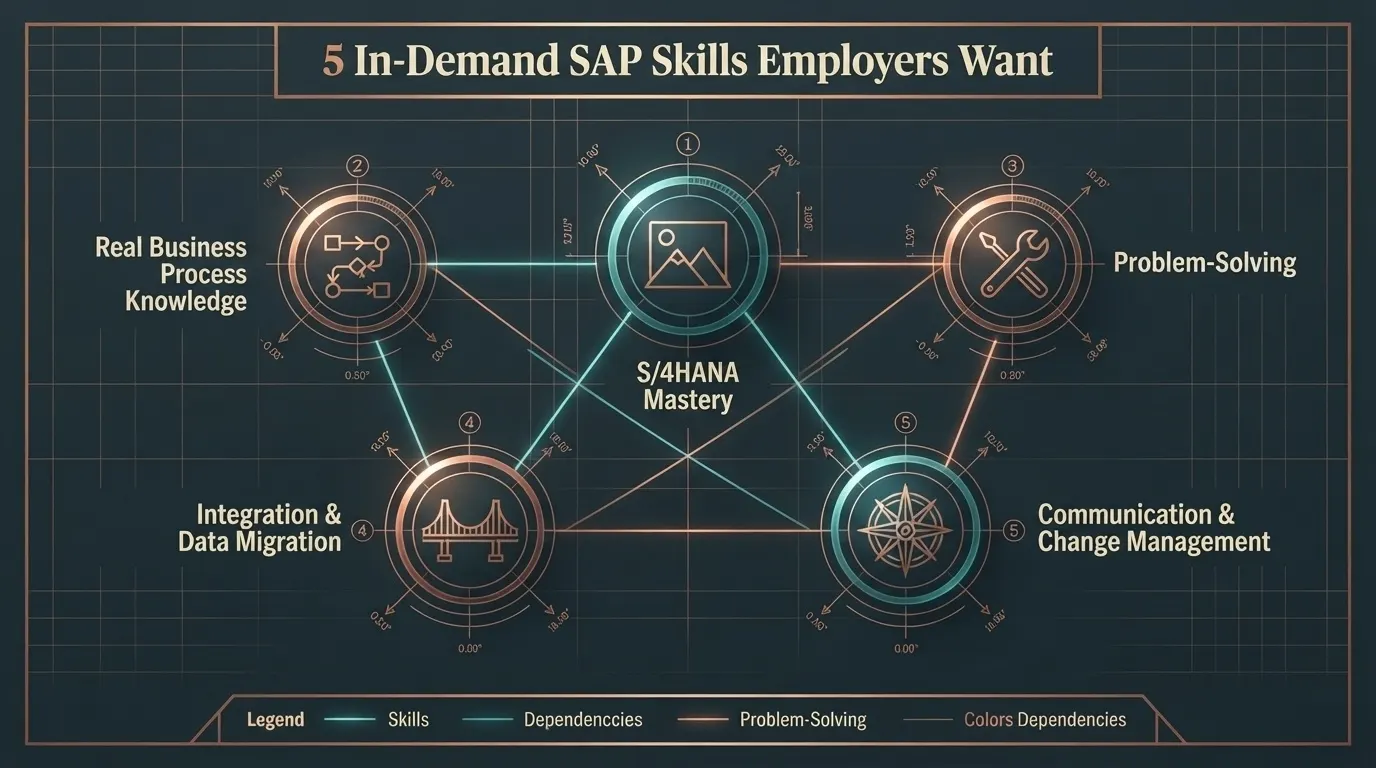
The Top 5 Skills That Actually Matter
1. SAP S/4HANA Mastery (Technical + Functional):
S/4HANA isn’t “the next big thing”; it’s happening right now. Demand will take off in 2024, skyrocket in 2025.
In-Demand Technical Skills
- ABAP for SAP S/4HANA: If you want to build, tweak, or improve SAP applications for today’s business world, learning ABAP for SAP S/4HANA is a solid move. This skill carries real weight among SAP developers; it’s a core building block in the field.
- SAP HANA Database Tuning: Speed matters. SAP HANA database tuning means you’re the one who knows how to make systems faster and more efficient. If a company runs SAP, it needs someone who can squeeze every ounce of performance out of its databases.
- Cloud and Hybrid Cloud Setups: Cloud technology isn’t going away; if anything, it’s expanding. When you know how to set up, run, and maintain SAP systems in both cloud and on-premises environments, you become a go-to person as companies are going through the transition.
- Machine Learning and AI Integration with SAP: Machine learning and AI are high in demand and when it is integrated with SAP solutions, it’ll help businesses automate work, make better decisions, and uncover new insights. This area’s exploding with opportunity.
- SAP Fiori Application Development: With more companies shifting toward a better user experience, knowing how to create clean, simple, and responsive SAP Fiori apps will put you in high demand.
In-Demand Functional Skills
- SAP MM (Materials Management): SAP MM keeps the gears of procurement, inventory, and planning moving smoothly. If you’re good at MM, you directly help companies untangle their supply chains and keep operations running without a hitch.
- SAP SD (Sales and Distribution): With SAP SD, you handle everything from sales and orders to shipping and billing. Any company that wants to boost sales performance looks for people who really get the SD module.
- SAP FICO (Finance and Controlling): If numbers are your thing, SAP FICO runs the show for finance accounting, reports, budgeting, and cost control. It’s been a staple for years because every business needs solid financial management.
- Business Process Mapping: You need to map out how a business works before jumping into any SAP configuration. This step ensures that what you are building is what the business really needs, not just a one-size-fits-all template.
- End-to-End Implementation Experience: Companies love to hire people who have seen an SAP project from the very beginning, planning to go-live and where the candidate know how to recognize problems and fix them accordingly.
2. Real-Life Business Process Knowledge:
Simply knowing the SAP modules doesn't work out, instead you need to understand how real businesses tick. Can you map an entire procure-to-pay flow? Know what a financial close looks like? Ever solved a sales order pricing issue on the fly? These aren’t on a certification exam. This is what you face every week.
3. Problem-Solving on the Spot:
No one tells you this up front, but SAP systems break. Data moves the wrong way. Customizations fight the default setup. Your value comes from how you diagnose and fix these issues in the heat of a production environment. That’s what sets real consultants apart.
4. Integration & Data Migration Skills:
Large corporations don’t just run SAP in isolation, instead they integrate it with Salesforce, logistics platforms, e-commerce, legacy databases, cloud services you name it. Data migration skills are gold; every S/4HANA project needs someone who can move data without breaking a sweat.
5. Communication & Change Management:
The best SAP consultants aren’t always the biggest techies. The winners are the ones who can turn technical jargon into language actual business people understand. You’ll spend more time explaining solutions than writing ABAP. If you can translate between “tech” and “business,” you’re in.
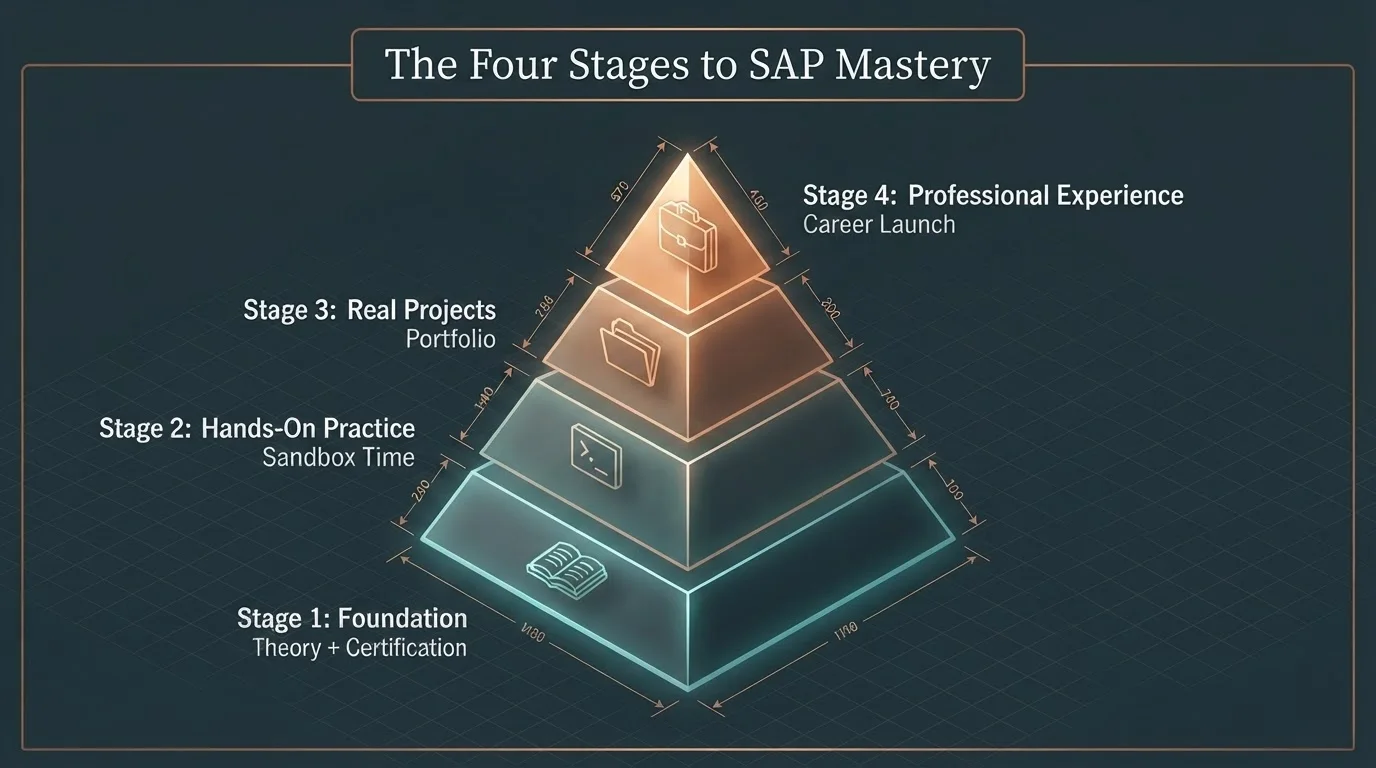
The Real Path to SAP Mastery: Four Stages
Here’s how you actually level up:
Stage 1: Learn Your Foundation (Theory + Certification)
Start here, but don’t stop here.
- Take structured SAP training
- Study the modules that matter for your target job
- Prep hard for the cert exams
- Get familiar with SAP’s navigation and lingo
Plan on 2–4 months for this. Certifications open interview doors, and SAP’s new exam style (after Nov 2025) will focus much more on practical skills.
Stage 2: Get Hands-On (Sandbox Time)
This is where almost everyone drops the ball. They pass the test, then call it a day.
Here’s what you need:
- SAP Learning Site Sandbox (free for registered users): Practice in S/4HANA Cloud; use the built-in AI copilot for help.
- Paid Sandboxes (around $500/month): More realistic, full control, all modules.
- Company training systems: If you’re working, ask for sandbox access to test things.
- Internal Projects: Jump into internal projects if possible, even as an observer.
Spend 3–6 months here if you can. Don’t just click around; create a purchase order from scratch, build a report, break and fix things. Act like it’s a real system.
Stage 3: Build Real Projects
This is what puts you ahead of everyone who just “studies SAP.”
Try these:
1. SAP MM – Procurement Process Optimization
- Map an end-to-end purchase flow.
- Create vendor master data, set approvals, automate orders, handle receipts and invoices.
- Demonstrate Business Impact, for instance “30% reduced procurement cycle time.”
2. SAP SD – Order Management System
- Implement order-to-cash, set up discounts & credit checks, create billing docs.
- Enhanced order accuracy.
3. SAP FICO – Financial Close Acceleration
- Build Chart of Accounts, Automate Journal Entries, Set Up Reports
- Cut financial close time in half.
4. Technical – Custom Fiori App
- Build and deploy a mobile app for workflow approval, integrate it, make it look good.
- Show a major boost in productivity.
Six to twelve months building these projects makes a huge difference. You’ll show employers you can deliver, not just pass a test.
Stage 4: Gain Professional Experience
How do you get your foot in the door when you don’t have a track record?
1. Freelance Projects:
Jump onto sites like Upwork or Freelancer and look for SAP gigs; it doesn’t matter if they’re small. It could be configuring something simple or helping write up documentation. Every project helps, and you’ll start collecting real testimonials and stories to tell future clients.
2. Internships & Junior Roles:
Take any entry-level job you can with companies that roll out SAP. Work as a trainee, join project teams, and stick close to senior consultants. Learn by watching them in action when they’re with clients. There’s a lot to pick up just by being there.
3. Internal Company Projects:
Already have a job? Raise your hand when your company rolls out anything SAP-related. Help out with upgrades, new features, or big system changes. Keep a record of what you do and what you learn; it all deserves a place on your resume.
4. Open Source & Community Contributions:
Get involved in the SAP Community, answer questions, write up tutorials, or build some code samples to share on GitHub. You’d be surprised who notices.
After a year or two, and two or three projects, you’re no longer “just certified.” You’re a pro.
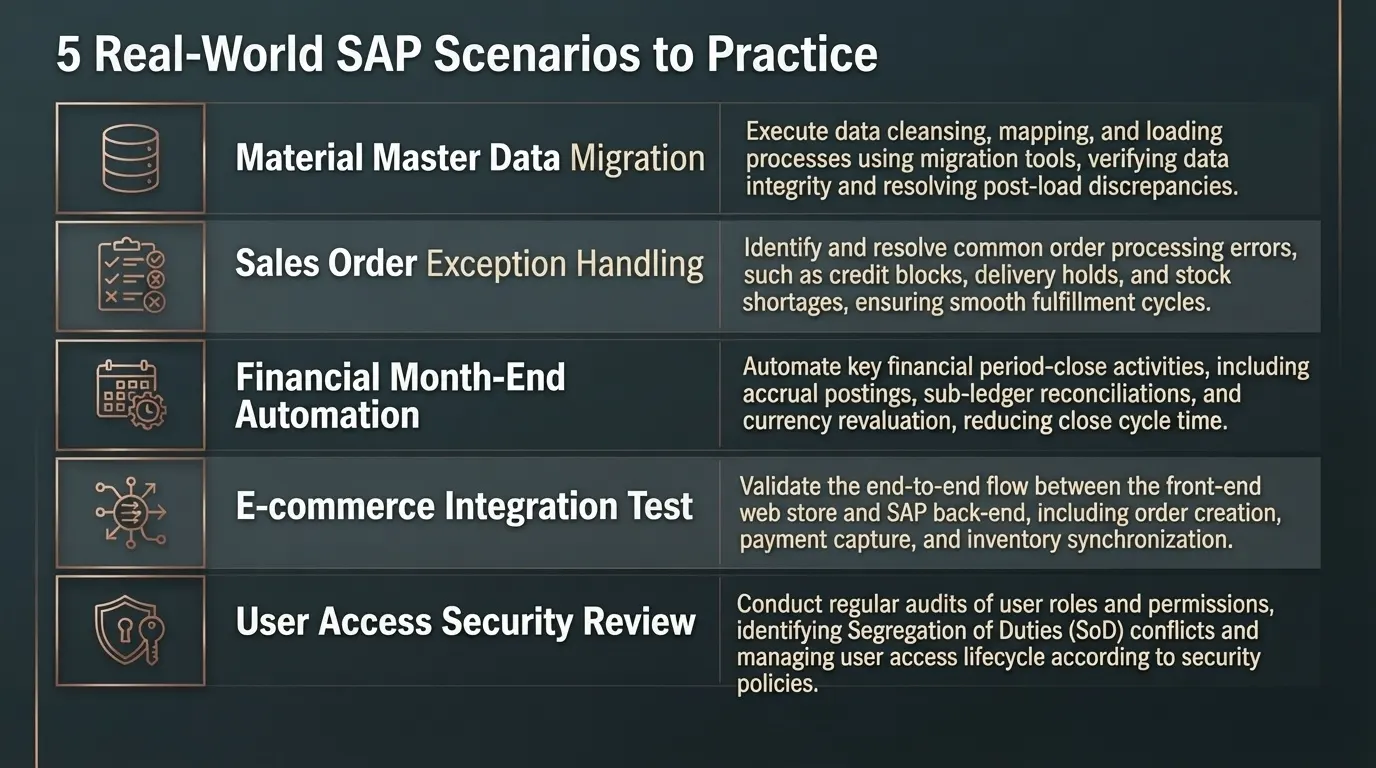
Try Out These 5 Real-World SAP Scenarios
You don’t need full access to a live SAP system to start building real skills. Just getting your hands dirty with practical business scenarios lets you see how SAP fits into everyday work.
1. Material Master Data Migration:
Consider a manufacturing company trying to move 10,000 material records to SAP S/4HANA, in this case you’d design a data template, hunt down bad or duplicate records, map out all the required fields, create a migration checklist, and document everything you do. Working through this teaches you not just data migration basics, but also SAP MM and data governance.
2. Sales Order Exception Handling
An important customer just placed a rush order, except they’ve gone over their credit limit. Now it’s on you to review the credit management process, nail down the steps for overriding the limit, map out the workflow, document it, and even prepare training materials for users. This scenario increases your SAP SD knowledge, increases your knowledge of business processes, and improves your troubleshooting skills.
3. Automation Financial Month-End Close
Suppose the finance team spends way too long manually posting recurring accounting entries every month. Here, your job is to analyze their process, automate those recurring entries, generate reports, and then show just how much time the team saves. It’s hands-on exactly what you need to strengthen your SAP FICO, finance, and automation chops.
4. SAP To E-commerce Integration Test
If a retailer working to sync inventory data between Shopify and SAP in real time, in this case your role will be to learn the integration process, map the data flow, test for errors, and document how it all fits together. Practicing this builds your knowledge of SAP integration and technical architecture.
5. User Access Security Review
Let’s say you discover 30% of users in an organization have more SAP access than they actually need. You have to review user roles, line up permissions with what people actually do, redesign access rights, put together a segregation of duties matrix, and document your security process. This one is great for SAP Security, and access management skills.
Certification + Hands-On Skills: The Winning Combo
Walking into the job market with an SAP certification is a solid start, but if you can combine that with some real-world experience, you stand out. Employers want people who do more than just know the theory or memorize features. They want problem-solvers who can jump into real projects and make things work.
If you’ve only got the certification under your belt, you can probably ace the exam, explain what SAP does, maybe get through interviews, and land a junior spot. Still, real business experience will likely be missing.
But if you add hands-on know-how? Now you can solve actual company problems, work on projects, explain why SAP matters, and generally land yourself better offers and higher salaries.
SAP knows this too; they’ve started upping their certification game by making exams more scenario-based, including performance assessments, and even open-book formats. The goal is to make sure that passing means you really understand the practical side, not just rote learning.
How Our SAP Certification Courses Help You Get Both
- A lot of learners ask how they can pick up both the certification and the skills at the same time. That’s exactly what our training is built to do.
- Our SAP Course based System Exam Tasks stick close to SAP’s own certification objectives, but every single topic comes with practical exercises so you can actually try out what you’re learning. You cover the theory, and then you put it to work.
- We use business case studies rather than just basic demos, so you get practice with challenges real companies face.
- You’ll work on portfolio projects during the course, which means you’ll have something solid to show potential employers when you’re ready to apply for jobs.
- Plus, you’ll have unlimited access to an SAP sandbox environment, basically a safe space where you can practice as much as you want.
- Our instructors have been out there, spending over a decade working on SAP projects, so they’re ready to share tips and best practices straight from the field.
You don’t just get technical training; there’s career support too. From resume help to interview prep to advice from pro SAP recruiters, we’ve got your back as you prepare to launch your SAP career.
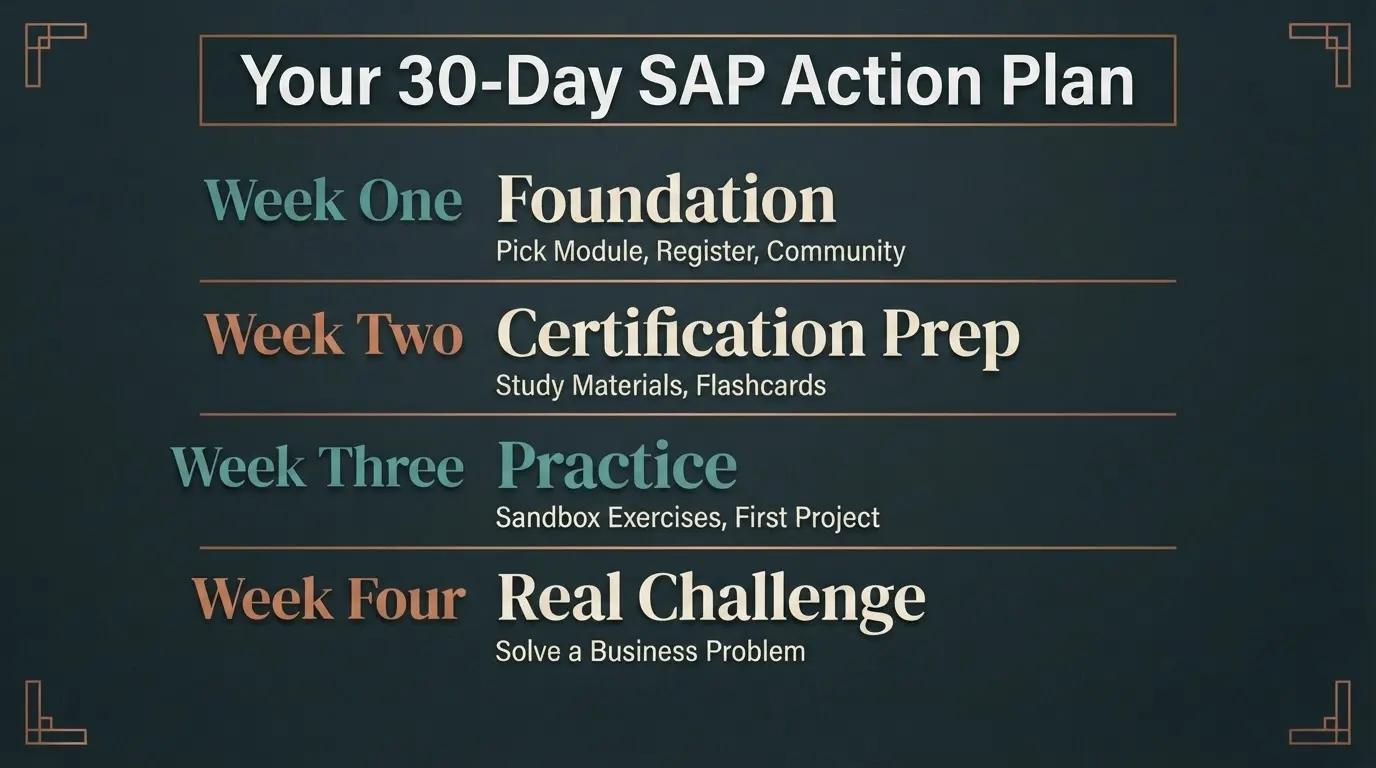
Your 30-Day SAP Action Plan
Week 1: Build Your Foundation
Pick the SAP module that fits your career goals and sign up for the certification course. Get yourself registered on SAP Learning, join the SAP Community forums, and start making connections.
Week 2: Zero in on Certification Prep
Tackle the first quarter of your study plan and take good notes along the way. Make flashcards for those must-know SAP transaction codes and check out extra tutorials to shore up your understanding.
Week 3: Practice
Get into the SAP sandbox environment and complete at least five practical exercises. Write down every step you take, and start working on your first real SAP project.
Week 4: Solve a Real Business Challenge
Pick a real-world business problem and use your SAP knowledge to work up a solution. Try it, record your results, share what you did to get feedback, and keep getting better.
If you work through this 30-day plan, you won’t just learn SAP; you’ll start putting it to use for real.
Conclusion: Build Skills That Stick
SAP certification can help get your resume noticed, but in the real world it’s problem-solving skills that count. That’s what sets you apart once you’re on the job.
Companies want SAP pros who can get results, not just folks with fancy certificates. If you balance certification with hands-on experience, you’ll come across as a much stronger candidate.
With more companies moving to SAP, there’s a real need for experts who can handle S/4HANA migrations, bring AI into business processes, manage clean data migration, solve tough technical problems, and most importantly, create business value.
Build both sides: get certified and practice solving real problems. You’ll join the next wave of SAP professionals who can do more than just talk.
Now’s a great time to start your SAP journey and stack up the skills you’ll need for years to come. Start practicing today with The Exam Questions and test yourself with real exam-type questions.