You’re probably stuck on one big question as you scroll through SAP certification requirements: Do You Need Prior Experience for SAP Certification?
A lot of people ask if they need work experience before they can get SAP certified. The short answer: No, you don’t, at least for most Associate-level certifications. You can sign up, pay the exam fee, and sit for the test without ever having worked on an SAP project. But honestly, passing the exam and actually working in SAP are two totally different things. You’ll still need to put in some serious prep if you want to pass.
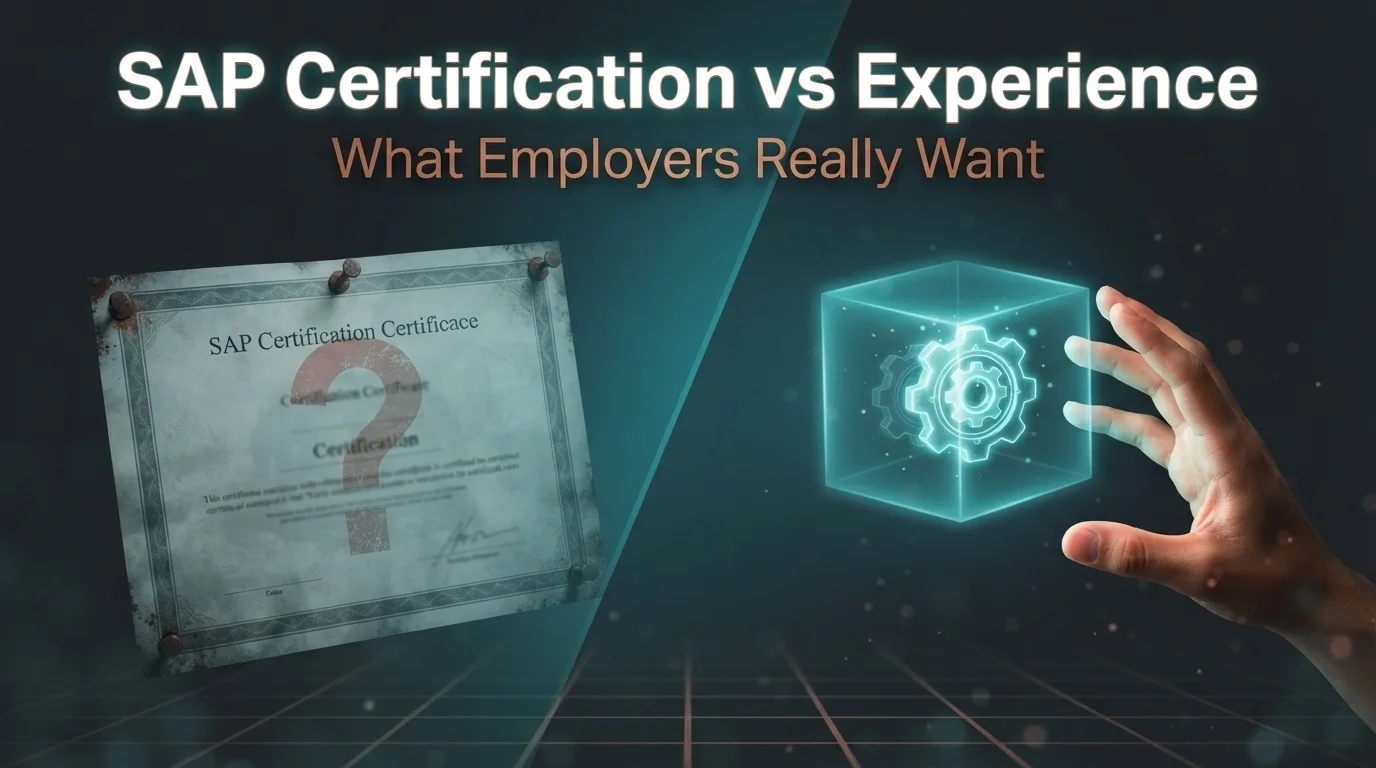
Explore: SAP Certification vs Experience: What Employers Really Want

Getting SAP Certified Without Experience
Yes, you can get SAP certified without any hands-on work experience. Anyone can register for most SAP Associate exams through SAP Learning Hub. But don’t expect to breeze through; understanding the basics of SAP and how business processes work is key to doing well.
What SAP Actually Wants
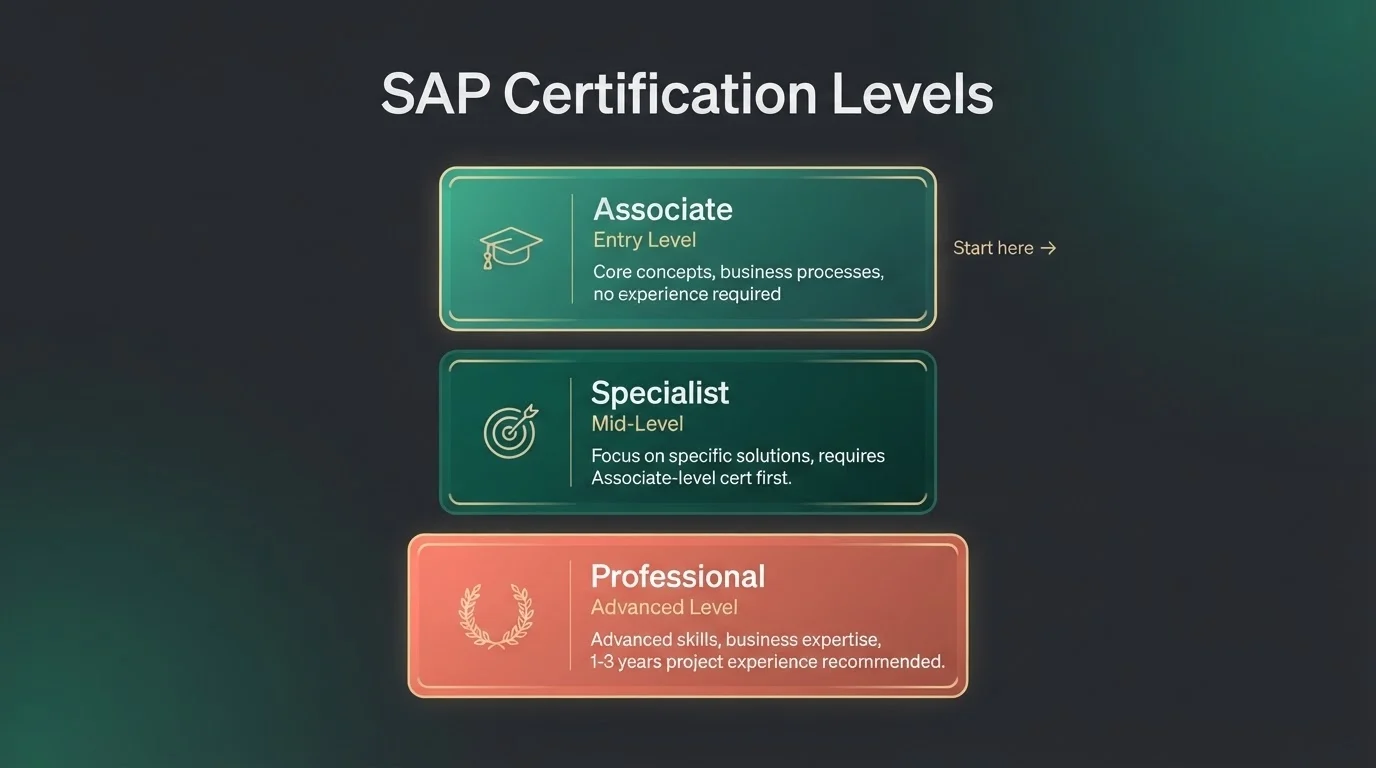
SAP’s requirements change depending on the certification level.
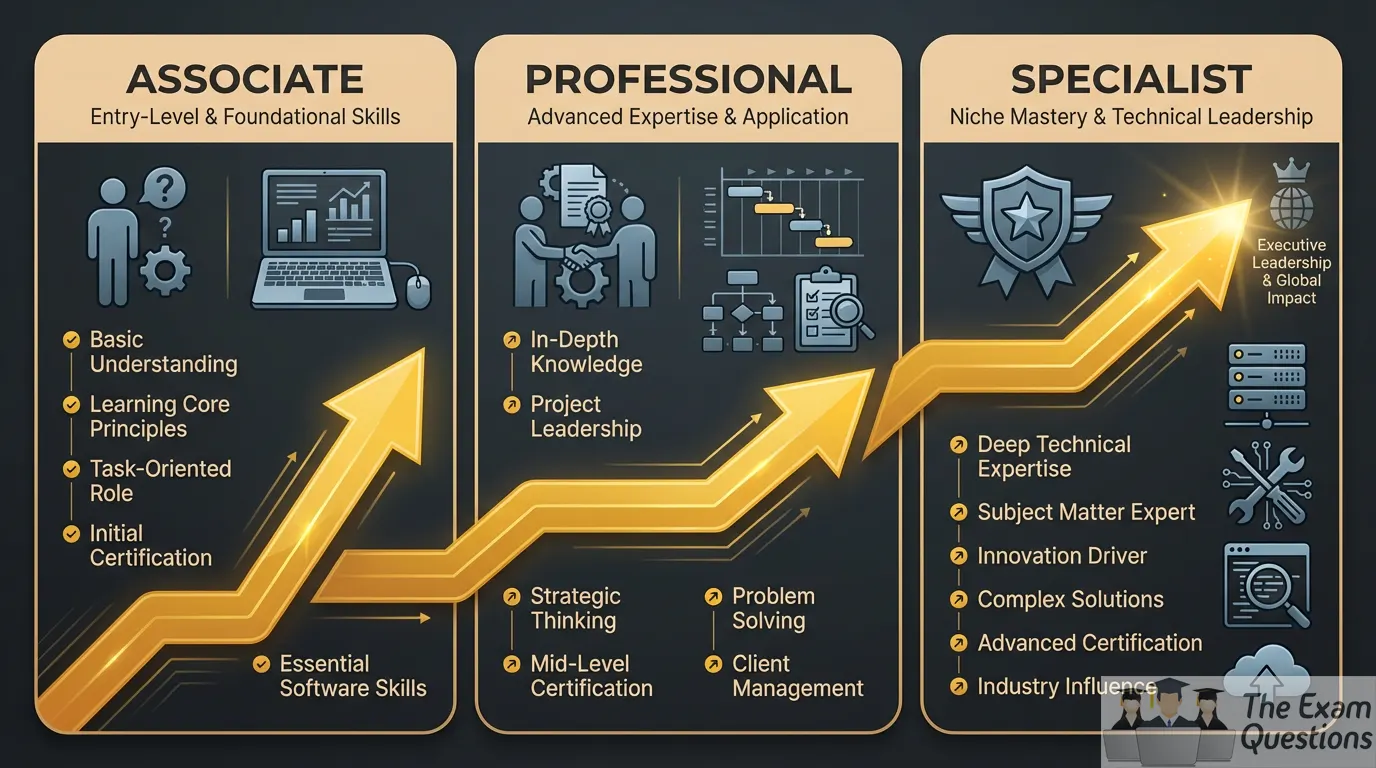
- You don’t need work experience for associate certifications, but a good understanding of SAP concepts is required.
- For Professional certifications, SAP expects one to three years of project experience.
- Specialist certifications usually want you to have the relevant Associate certification first.
So even if you’re new, you’ll need to study hard before taking the exam through SAP Learning Hub.
SAP Certification Levels – Summary
1. SAP Certified Associate (Entry Level)
It is the foundation level course designed for beginners, recent grads and newcommers. They consist of core concepts and business processes. With good preparation, lots of people pass these exams on their first try.
2. SAP Certified Specialist
Specialist certifications zoom in on particular SAP solutions or roles by sharpening your slills . Usually, you need the matching Associate certification before you can go for a Specialist exam.
3. SAP Certified Professional (Advanced Level)
If you’re already experienced and have worked on SAP projects, the Professional certification is where things get tougher. These tests check advanced skills, your business know-how, and how you handle real-world problems. You really want hands-on experience before tackling these.
Can Beginners Pass SAP Certification Exams?
Definitely, tons of newbies pass SAP exams, but you need a solid study plan. No atter, whether you are a fresher or experienced in SAP, steady learning and regular practice will help you grasp the concepts for the exam.
1. Tips From Successful Candidates
People who’ve passed say practical study beats reading theory any day. Jumping into SAP systems, practicing often, and understanding real business scenarios make a big difference. SAP community is packed with materials about hands-on learning, FAQs and tutorials that will help to connect with other members.
2. What Happens During the Exam
Expect the exams to last two or three hours, with a passing score around 60–70%. Most questions deal with real business scenarios, not just facts you can memorize. So knowing how SAP actually works in practice is way more useful than just rote learning.
Beginner’s Guide to SAP Certification
1. Pick the Right Certification:
If you are a beginner, then you should go for the entry-level certifications. For instance, you can proceed with certifications like SAP S/4HANA Cloud, SAP BTP and SAP Fiori. Avoid trying more difficult Professional or Specialist modules until you are experienced or have gained some confidence.
2. Practice, Practice, Practice:
Practice makes a man perfect, similarly to get perfectly comfortable with SAP, the best approach is to practice it continuously.SAP Learning Hub gives you guided lessons and hands-on access, and tons of content in the SAP Community.
3. Build Strong Basics:
Before you begin with the exam preparation, get familiar with SAP’s business process handling and system navigation, figure out the difference between configuration and customization, learn how the modules connect, and try working through business scenarios.
4. Use Reliable Resources:
It is recommended to incorporate official SAP materials, SAP learning journey courses and SAP YouTube tutorials .
5. Schedule Your Exam
When you’re ready to test, set the date for your online exam. Four to six weeks planned will help you get into the groove of studying and be ready for the big day!
How to Get SAP Experience Before Your First Job
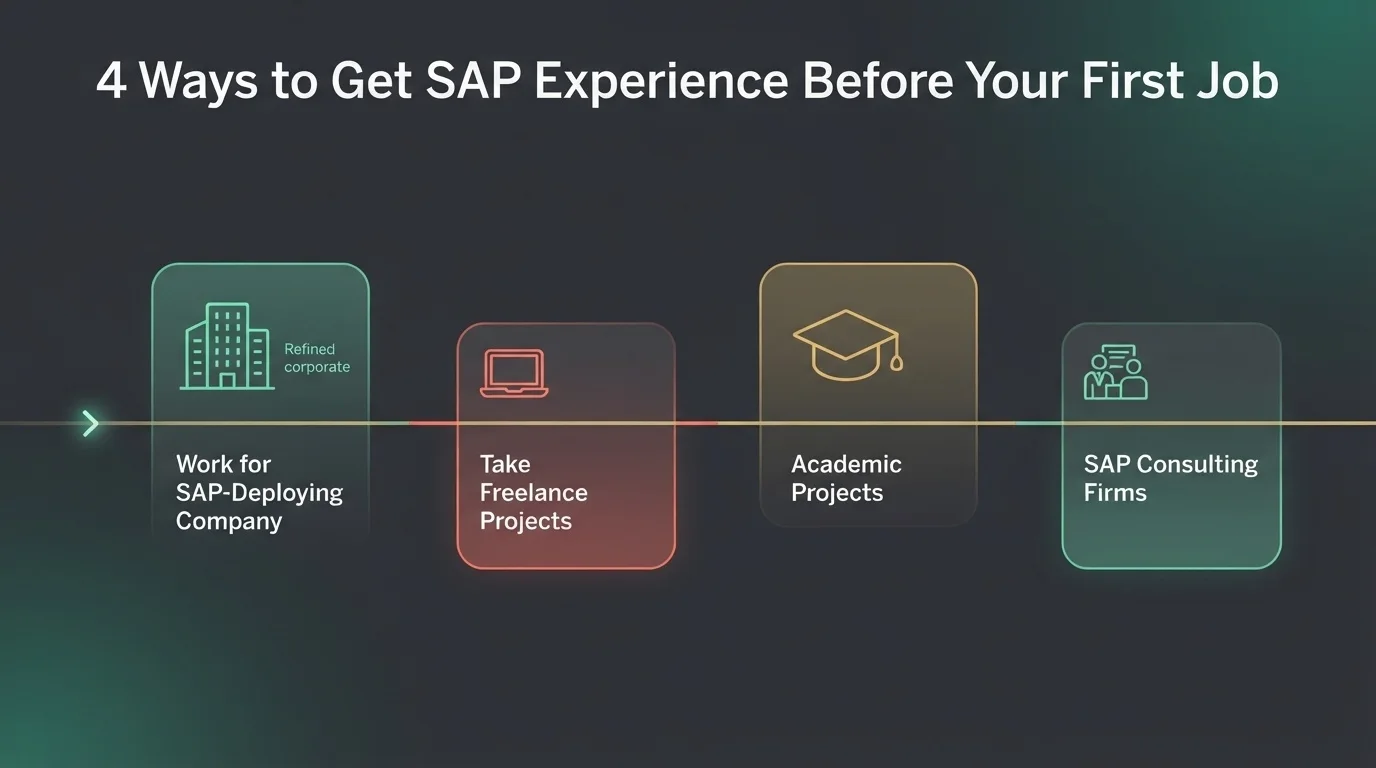
1. Work for an SAP Deploying Company
The easiest way to start your career is to work for a company that deploys SAP. If your first job is not in IT, you can volunteer to do SAP-related work or projects. You’ll learn from colleagues who already use SAP and, as you pick up skills, you might move into an SAP role.
2. Take Freelance Projects
Freelancing’s a good way to build experience too. You can offer services like data entry, basic configuration, or SAP training on freelance sites. Every project you finish is something you can add to your portfolio, which helps when you’re looking for a full-time job.
3. Work on Academic Projects
If you can access SAP Learning Hub Student Edition, jump into case study projects and really get your hands dirty. Finish a few of those, post about them on LinkedIn, and you’ll give recruiters something solid to see.
4. Apply to SAP Consulting Firms
A lot of SAP consulting firms bring on fresh grads for entry-level spots and teach them the ropes. Look for Associate Consultant or Junior SAP Consultant positions; these are great starting points to your career and a chance to learn on the job.
How Much Does SAP Certification Cost?
Getting certified takes some planning, especially money-wise. You’ll probably pay for a Learning Hub subscription, exam fees, and study materials. Altogether, the first year can get pricey for a lot of people.
|
Item |
Cost |
|
SAP Learning Hub (12 months) |
$1,460 - $2,424 |
|
Associate Certification Exam |
~$500 |
|
Professional Certification Exam |
$600 - $1,000 |
|
Study Materials (books, practice tests) |
$100 - $300 |
|
Total (First Year) |
$2,060 - $3,724 |
Ways to Lower the Cost
There are cheaper routes though. If you’re a student, you might qualify for the free Student Edition of SAP Learning Hub. There’s also openSAP for free resources. If you don’t want the Learning Hub, you can just pay for the exam itself and study on your own.
What Will You Get Out of It?
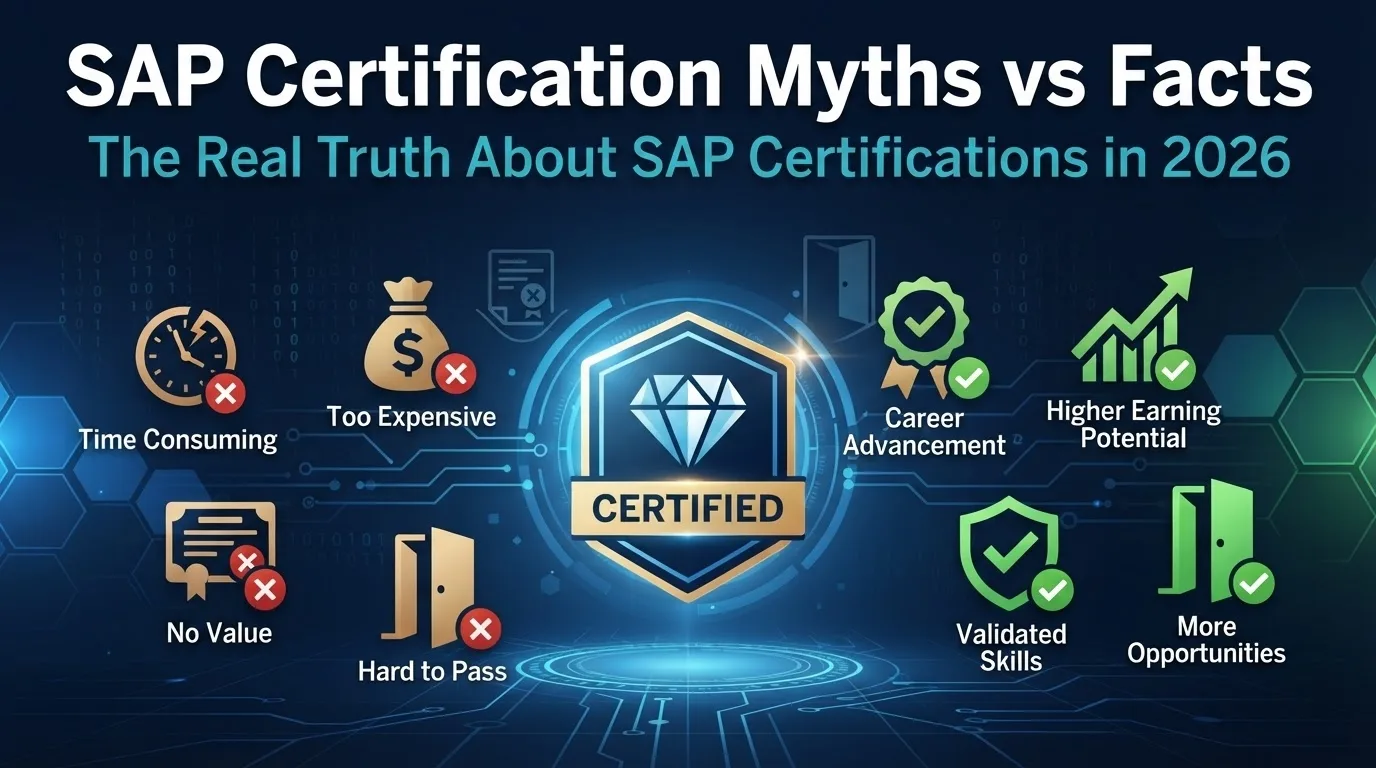
SAP certification opens doors. Certified pros often land higher pay and better job options and boosts salaries by 20–30%. As you build more experience, those numbers keep climbing.
Certification Vs Getting Hired: The Real Deal
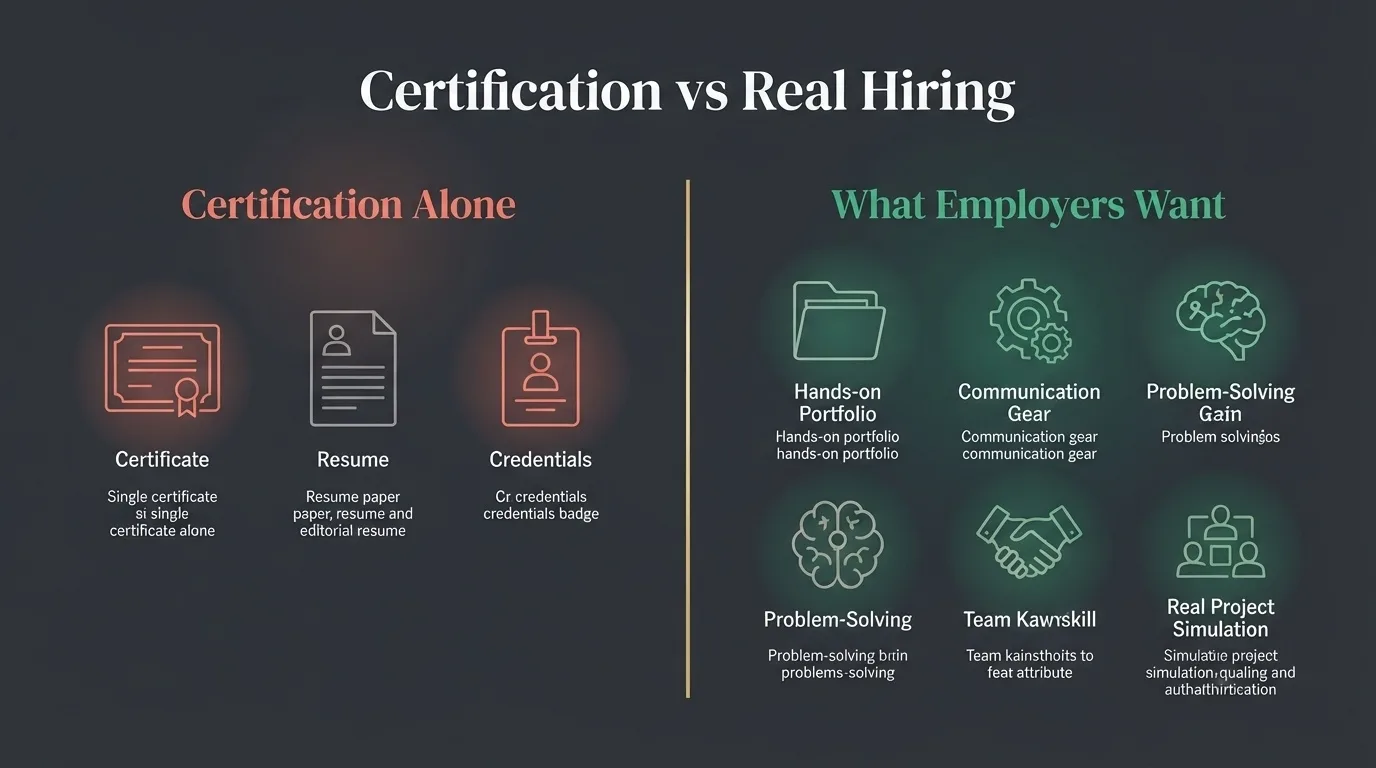
Getting an SAP certification does not mean you will get hired. Passing an exam proves you’ve studied the material, sure, but employers want proof that you can take that knowledge and actually solve business problems.
What Employers Really Care About?
Most companies care more about real, hands-on experience than they do about a certification alone. They look for people who’ve worked on actual or simulated projects, understand how businesses run, communicate clearly, solve problems on the fly, and can get along with others in a team. A certification will boost your resume, but it is only one piece of the hiring puzzle.
Common Rookie Mistakes to Avoid
1. Skipping Business Processes
A lot of people new to SAP get caught up in tinkering with the tech and forget what it’s actually for: helping real businesses run smoothly. If you get a handle on the basics of things like procurement, finance, or supply chain management, you’ll get why SAP works the way it does and how it connects to real-world companies.
2. Memorizing Instead of Understanding
Some people try to cram a bunch of SAP facts into their heads and hope for the best. That’s not going to cut it. SAP exams are built around real scenarios. If you actually understand why a process works, not just what buttons to press, you’ll be able to solve problems and tackle the questions confidently.
3. Picking the Wrong Exam
It’s easy to aim high and sign up for an advanced or super technical certification right away. That usually leads to frustration. Start with an Associate-level certification that fits with your goals. It’s a smarter way to lay the groundwork for everything you’ll do later.
4. Believing Certification Alone is Enough
SAP certification is not enough, because employers want people who keep learning, get hands-on practice, and connect with others in the field. That’s how you set yourself apart and actually land a job.
Making It Work: Tips That Actually Help
1. Join the SAP Community
Don’t go it alone. Dive into the SAP community; you’ll find tons of pros willing to help, answer questions, and keep you motivated. Check out SAP Community forums, LinkedIn groups, Reddit, local meetups and practice free scenario-based SAP Materials. That support is gold.
2. Boost Your LinkedIn
When you pass your SAP exam, put it on your LinkedIn right away. Show it off in your headline, post about what you’re learning, and stay active. Reach out to SAP recruiters or experienced professionals; they’ll notice.
3. Apply at the Right Companies
Start building your career foundation by targeting at the SAP relevant companies or recruitment agencies like consulting firms or SAP partners.
4. Build a Portfolio
Save what you do as you practice: screenshots, configurations, process diagrams. Share them as LinkedIn case studies. It’s a great way to prove you actually know your stuff and can solve real problems.
Is SAP Certification Still Worth It in 2026?
Absolutely. SAP’s not going away; if anything, it keeps getting bigger and more important. Companies lean on SAP for a huge chunk of their operations, and the need for skilled SAP professionals just keeps climbing.
Right now, there’s a huge push for S/4HANA upgrades, and companies everywhere are looking for people who can help them make the switch. If you’re certified, you’ll find doors opening.
SAP’s cloud platform is expanding fast, which means new tech and tools every year. If you pick up cloud-specific skills, your value shoots up.And with AI features starting to pop up in SAP, there are new paths to specialize and even new kinds of jobs. Keep your SAP skills current, and you’ll stay ahead.
Enterprise software is at the heart of every modern business. The more companies grow and upgrade, the more they need good SAP professionals. That demand’s not slowing down.
Your Action Plan: Start Today
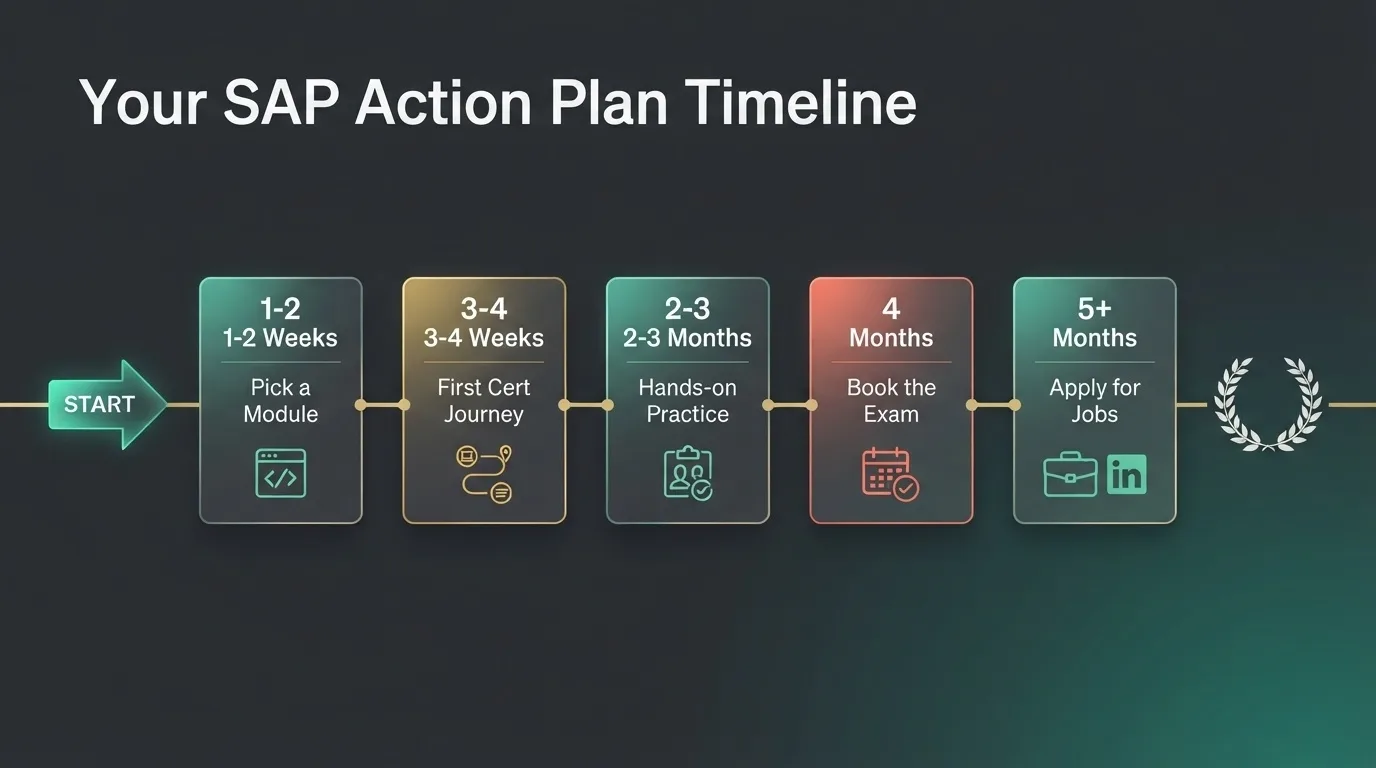
1–2 Weeks:
- Pick an SAP module that feels like a good fit for your background or interests: SAP finance, SAP HR, logistics, whatever clicks. Get into free openSAP course and join an online SAP group.
3–4 Weeks:
- To get the basics down, sign up for SAP Learning Hub or the Student Edition, and push through your first learning journey.
2–3 Months:
- Get hands-on in the SAP system. Practice every day and keep working through practice exams to build confidence. If you can, study with a buddy or join a group; it helps more than you’d think.
4 Months:
- Once you’re scoring well on practice tests, book your exam, do a few full-length practice runs, and shore up any gaps before test day.
5 Months & Above:
- Once you have passed, update your LinkedIn with your new certification. Continue to learn, acquire new skills, and develop your network to set yourself up for long-term success by applying for entry-level SAP jobs.
Conclusion
You don’t need job experience to get SAP certified. But the real recipe for success is combining certification with real business know-how, hands-on experience, a habit of learning, and a clear goal for where you want to go. SAP pros are in demand, and plenty of companies actively look for people with up-to-date certifications and practical skills. If you’re consistent and genuinely interested, SAP can open the door to a stable and rewarding career.
Don’t wait for experience; get started now. Learning today sets you up with experience down the road. Every new skill gets you closer to your SAP career.Your SAP journey starts right now. But each step moves you forward.
Don’t risk missing out on your SAP certification. Train smarter with The Exam Questions and build the skills you need to pass on your first shot.