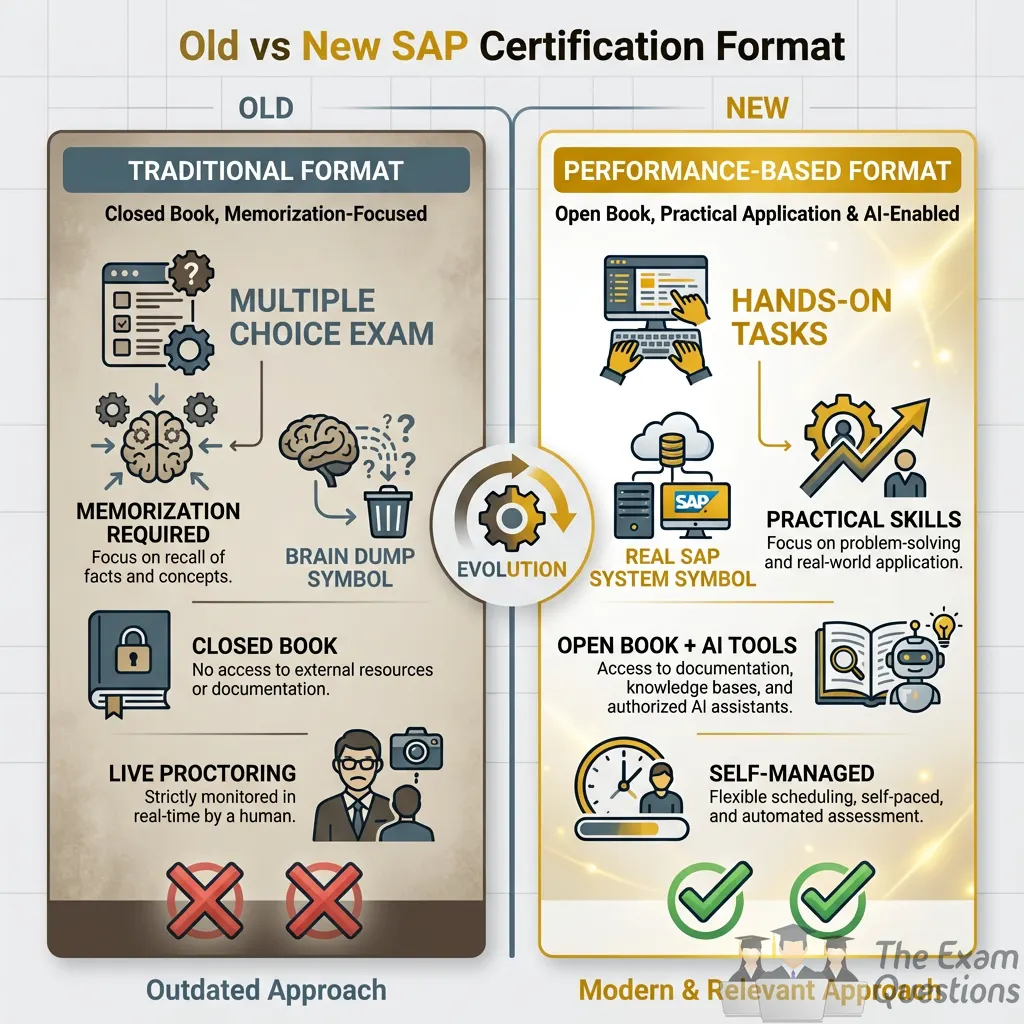
The traditional SAP certification exam is dead.
And honestly? That's a good thing.

For years, SAP professionals have memorized transaction codes, studied brain dumps, and crammed hundreds of multiple-choice questions - only to forget most of it the day after the exam.
But here's what's changed:
SAP has completely reimagined its certification program with performance-based exams that mirror how you actually work. No more memorization. No more exam dumps. Just you, real SAP environments, and practical challenges that prove what you can actually do.
By mid-January 2026, most SAP certifications will use this new format. By March 2026, the transformation will be complete.
In this comprehensive guide, you'll discover:
- Why SAP made this radical shift (and why it benefits you)
- How the new performance-based exam format actually works
- What to expect during your certification journey
- How to prepare for success in this AI-enabled testing environment
- What this means for existing certified professionals
- Step-by-step preparation strategies
Let's dive in.
What Is SAP Certification Reimagined?
Here's the deal:
SAP Certification Reimagined is SAP's complete overhaul of how they validate professional skills in the age of AI.
Instead of traditional multiple-choice tests, you now complete hands-on tasks in real SAP systems or respond to realistic roleplay scenarios - exactly like you would on an actual project.
The Core Philosophy: Prove What You Can Do, Not Just What You Know
Think about it.
When was the last time your manager asked you to choose the correct answer from four options? Never, right?
Real SAP work involves:
- Solving complex business problems
- Configuring systems to meet requirements
- Troubleshooting issues in live environments
- Making decisions with incomplete information
- Using available resources (including AI tools) to deliver results
And that's exactly what the new certification format tests.
Why SAP Made This Change (And Why It Matters to You)
You might be wondering:
"Why now? What prompted this massive shift?"
The AI Reality Check
Here's the kicker:
In 2026, AI tools like ChatGPT, Claude, and SAP's own Joule can answer most traditional exam questions in seconds. Memorizing information that AI can instantly provide doesn't prove professional competence anymore.
What matters now is your ability to:
- Apply knowledge in context
- Solve real problems
- Deliver actual outcomes
- Use AI as a tool (not a crutch)
The Credibility Problem
Let's be honest.
Traditional SAP certifications had a credibility problem. Exam dumps and brain dumps were everywhere. Anyone could memorize answers without truly understanding SAP systems.
Employers knew this. That's why many companies barely looked at certifications during hiring.
The new format changes everything:
- No more brain dumps (tasks change for each exam)
- No more memorization-based passing
- Real validation of practical skills
This means your certification will actually mean something to employers again.
How the New Performance-Based Exam Format Works
There are 2 types of Exam format. Scenario Assessment and System Based Assessment.
Let's break down exactly what you'll encounter in the new certification format.
1. Scenario Assessment
You're not racing against an arbitrary clock on question 47 of 80. Instead, you receive:
- Respond to realistic business scenarios via video submissions
- Client scenario simulations
- Solution design challenges
- Stakeholder communication tasks
- Project-based scenarios with realistic deadlines
- Multiple tasks within each scenario
- Appropriate time allocation based on real-world expectations
2. System Based Assessment
- You will be given tasks and you will have to perform manual activites on the system.
Open-Book, Open-Resource Approach
This is game-changing:
You can use:
- ✅ SAP documentation
- ✅ SAP Help Portal
- ✅ AI-assisted tools (ChatGPT, SAP Joule, etc.)
- ✅ Your own notes
- ✅ Online resources
You cannot:
- ❌ Receive direct help from others
- ❌ Share exam content
- ❌ Use automated scripts to complete tasks
Why this matters:
This is how you work every single day. No one expects you to memorize every transaction code or configuration path. They expect you to know how to find answers and deliver results.
No Live Proctoring
Here's what's different:
- No webcam monitoring during the exam
- No restrictive proctoring software
- Self-managed exam experience
- Modern, trust-based approach
SAP uses backend validation to ensure integrity without the stress of being watched.
What Types of Certifications Are Available?
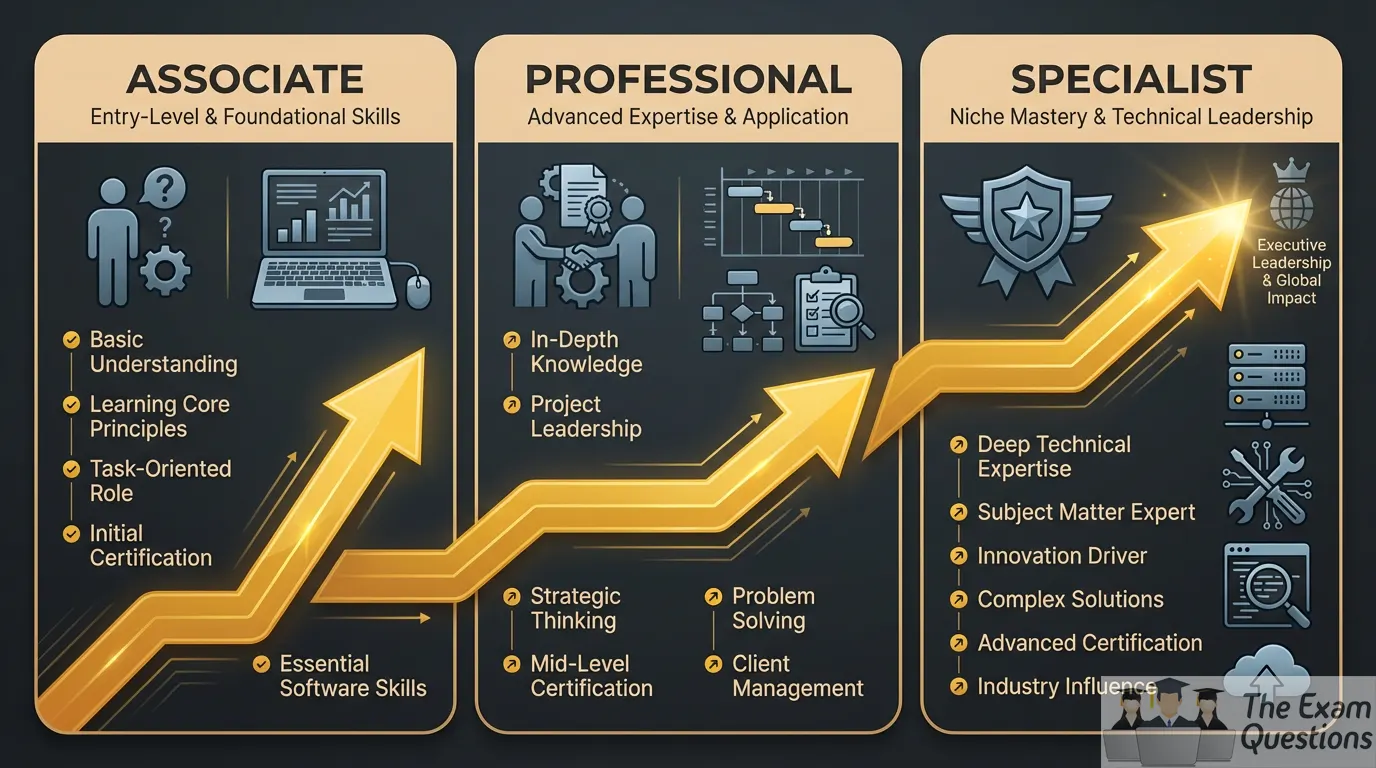
The new performance-based format applies to all SAP certification categories:
Associate Level
Entry-level certifications proving foundational skills in:
- SAP S/4HANA modules (FI, CO, MM, SD, PP, etc.)
- SAP SuccessFactors
- SAP Analytics Cloud
- SAP BTP (Business Technology Platform)
- SAP Integration Suite
Professional Level
Advanced certifications for experienced practitioners demonstrating:
- Deep module expertise
- Complex scenario resolution
- Architecture and design skills
- Integration capabilities
Specialist Certifications
Focused certifications for specific technologies:
- SAP HANA
- SAP Fiori
- SAP Cloud Platform
- SAP S/4HANA Migration
- AI and Machine Learning with SAP
Timeline: When Is This Happening?
Here's the rollout schedule:
November 2025
- Initial pilot rollout begins
- Selected certifications (like SuccessFactors) launch in new format
- Early adopters begin testing
Mid-January 2026
- Most SAP certifications transition to performance-based format
- Wide availability across modules
End of March 2026
- Complete transition finished
- All new exam attempts use performance-based format
- Old format completely retired
Bottom line: If you're planning to get certified in 2026, you'll take the new performance-based exam.
Impact on Existing SAP Certified Professionals
You might be thinking:
"I'm already certified. Do I need to retake everything?"
Good News: No Immediate Re-Certification Required
Here's what happens:
If you're already certified:
- ✅ Your certification remains valid
- ✅ Follow your regular renewal cycle
- ✅ Take the standard "stay-certified" assessment when your certification expires
- ✅ No rush to retake anything
Eventually: All certifications will transition to performance-based renewal assessments, but SAP will provide plenty of notice.
Recognition and Badges
Your Credly badge will still:
- Display your certification name and level
- Show completion date
- Include SAP verification
What's new: Badge descriptions now highlight "applied validation" and "performance-based assessment," which actually boosts employer confidence in your skills.
How to Prepare for the New Performance-Based Exams
Now comes the important part:
How do you actually prepare for this completely different exam format?
Step 1: Shift Your Mindset from Memorization to Application
Forget everything you knew about traditional exam prep.
Old way:
- Memorize transaction codes
- Study brain dumps
- Practice multiple-choice questions
New way:
- Practice hands-on tasks in SAP systems
- Solve real scenarios
- Build practical experience
Step 2: Get Hands-On System Access
You need practical system time. Period.
Options for system access:
1. SAP Learning Hub
- Includes access to SAP learning systems
- Guided learning paths
- Practice scenarios
- Available here
2. SAP Training Systems
- Request access through training providers
- Company-provided sandbox environments
- Partner demo systems
3. SAP Free Trial Systems
- SAP BTP trial account
- SAP Analytics Cloud trial
- Various module-specific trials
4. Personal Development Environment
- Set up local SAP systems (technical roles)
- Use Docker containers for SAP HANA
- Cloud-based development environments
Step 3: Master Real-World Scenarios
Practice these skill areas:
For All Roles:
- End-to-end process execution
- Troubleshooting common errors
- Configuration best practices
- Integration between modules
For Functional Consultants:
- Requirements gathering
- Gap analysis
- Process design
- User training scenarios
For Technical Consultants:
- ABAP development tasks
- Fiori app development
- BTP integration
- Performance optimization
For Architects:
- Solution design
- Architecture decisions
- Technology selection
- Migration strategies
Step 4: Learn to Use AI Tools Effectively
Here's something critical:
Since you can use AI during the exam, learn how to use it effectively NOW.
Practice with:
ChatGPT/Claude for:
- Explaining error messages
- Suggesting configuration approaches
- Reviewing your solution logic
- Finding relevant documentation
SAP Joule for:
- SAP-specific queries
- Best practice recommendations
- Transaction code lookups
- Process guidance
Important: AI gives suggestions, but you must understand, validate, and implement solutions. The exam tests your judgment, not AI's capabilities.
Step 5: Study Official SAP Learning Content
Don't skip the fundamentals:
Recommended resources:
- SAP Learning Journeys (role-based paths)
- SAP Press books for your module
- SAP Community blogs and discussions
- Official SAP training courses
- SAP Help Portal documentation
Step 6: Join Study Groups and Communities
You're not alone in this transition.
Connect with:
- SAP Community forums
- LinkedIn SAP certification groups
- Reddit r/SAP discussions
- Local SAP user groups
- Professional networking events
Step 7: Take Practice Assessments
Before your actual exam:
- Complete SAP's sample scenarios (when available)
- Practice timeboxed challenges
- Simulate open-book exam conditions
- Test your research and problem-solving speed
What to Expect on Exam Day
Let's walk through the actual exam experience:
Before You Start
System Requirements:
- Stable internet connection
- Modern web browser
- Adequate computer performance
- Quiet workspace (even without proctoring)
What You'll Need:
- Your SAP Universal ID
- Exam confirmation
- Access to allowed resources
- Note-taking tools (if desired)
During the Exam
You'll encounter:
1. Scenario Introduction A business context explaining:
- Company background
- Current challenges
- Your role
- Expected deliverables
2. Multiple Tasks Sequential or independent tasks such as:
- Configuration exercises
- Troubleshooting challenges
- Design submissions
- Video response recordings (for some roles)
3. Time Management
- Each task has a time allocation
- You can see remaining time
- Some flexibility to manage task order
4. Submission Process
- Submit completed configurations
- Upload documentation or screenshots
- Record and submit video responses
- Provide written explanations
After Submission
Grading timeline:
- Automated portions: Immediate results
- Expert review portions: 2-4 weeks
- Video submissions: Up to 4 weeks
Results notification:
- Email notification when results ready
- Pass/fail decision
- Score breakdown (where applicable)
- Credly badge (if passed)
Common Questions About the New Format
"Is it harder than the old format?"
It's different, not necessarily harder.
If you have real SAP experience and practical skills, you might find it easier because you're doing what you already know how to do.
If you relied on memorization and brain dumps, yes - it will be significantly harder because those strategies don't work anymore.
"Can I still use training materials during the exam?"
Absolutely.
You can reference:
- SAP Help Portal
- Your personal notes
- Training guides
- AI tools
- Google searches
Just no direct human assistance.
"What if I don't finish in time?"
Tasks are timed based on realistic expectations. If you have practical experience and know how to use resources efficiently, time should be adequate.
Tips:
- Practice time management beforehand
- Don't overthink simple tasks
- Use AI to speed up research
- Focus on completion over perfection
"Do I need to be an expert to pass?"
No, but you need practical competence.
The exams test role-appropriate skills. Associate-level exams test foundational abilities. Professional-level exams test advanced expertise.
Match your preparation level to the certification tier.
"What happens if I fail?"
You can retake the exam following SAP's retake policy:
- Wait period before retake (typically 14-30 days)
- Standard retake fees apply
- Review feedback to improve
Pros and Cons of the New Certification Format
Let's be balanced:
✅ Advantages
For You:
- Validates real skills, not memorization
- More relevant to actual work
- Open-book reduces anxiety
- Better career credibility
- AI-enabled learning during exam
For Employers:
- Confidence in candidate abilities
- Reduced hiring risk
- Skills-based validation
- No more "paper certificates"
For the Industry:
- Eliminates brain dumps
- Raises professional standards
- Modernizes certification value
- Aligns with AI-enabled workplaces
⚠️ Challenges
Potential difficulties:
- Requires actual system access for preparation
- Can't rely on memorization shortcuts
- May take longer to prepare properly
- Need practical experience, not just theory
- Adjustment period for traditional test-takers
Our take:
These "challenges" are actually positives in disguise. They ensure certifications mean something real.
7 Strategic Preparation Tips for Guaranteed Success
Want to know the best part?
Here's your actionable game plan:
Tip #1: Start with SAP Learning Journeys
Navigate to learning.sap.com and:
- Select your target certification
- Follow the recommended learning journey
- Complete all modules systematically
- Track your progress
Tip #2: Get Daily Hands-On Practice
Even 30 minutes daily makes a difference:
- Log into your practice system
- Complete one scenario
- Try one new transaction
- Solve one configuration challenge
Consistency beats cramming.
Tip #3: Document Your Learning
Create your own:
- Configuration cheat sheets
- Common error solutions
- Step-by-step process guides
- Quick reference notes
You can use these during the exam!
Tip #4: Master the Art of Efficient Research
Practice finding answers quickly:
- Learn SAP Help Portal navigation
- Master Google search operators for SAP
- Bookmark frequently-used resources
- Practice AI prompting techniques
Speed matters when the clock is ticking.
Tip #5: Join a Study Partner or Group
Find others preparing for the same certification:
- Share practice scenarios
- Discuss challenging topics
- Review each other's solutions
- Stay motivated together
Tip #6: Simulate Exam Conditions
Before your real exam:
- Set a timer for practice tasks
- Use only open-book resources
- Work in a quiet space
- Complete full scenario run-throughs
Practice like you'll perform.
Tip #7: Focus on Understanding, Not Scripts
Don't just follow step-by-step guides blindly.
Understand:
- Why each configuration works
- When to use different approaches
- How components relate to each other
- What happens when things go wrong
Deep understanding beats surface knowledge every time.
How This Changes Your Career Trajectory
Here's what this means for your professional future:
Increased Credibility
When you put "SAP Certified" on your resume now, employers know:
- You have real, validated skills
- You can handle practical challenges
- You're not just a "paper consultant"
- You can deliver actual results
Better Job Opportunities
Companies will prioritize performance-based certified professionals because:
- Lower training costs
- Faster onboarding
- Immediate productivity
- Reduced hiring risk
Higher Earning Potential
According to industry data:
- Certified SAP professionals earn 15-30% more than non-certified peers
- Performance-validated certifications will command even higher premiums
- Specialized certifications (BTP, AI, S/4HANA Cloud) offer the best ROI
Future-Proof Skills
The new format ensures:
- You're learning current best practices
- You're comfortable with AI-assisted work
- Your skills remain relevant
- You can adapt to new SAP technologies
The ROI of SAP Certification in 2026
Let's talk numbers:
Investment Required
Exam fee: $500-$700 (depending on certification)
Preparation costs:
- SAP Learning Hub subscription: ~$200-400/month
- Training courses: $2,000-5,000 (optional)
- Practice system access: Varies (or free trials)
- Study materials: $100-300
Time investment: 3-6 months of preparation (2-5 hours per week)
Total: $1,000-$6,000 and 50-120 hours
Return on Investment
Salary increase:
- Entry-level: $5,000-$10,000 annual increase
- Mid-level: $10,000-$20,000 annual increase
- Senior-level: $15,000-$30,000 annual increase
Career opportunities:
- Access to 40% more job openings
- Higher interview conversion rates
- Stronger negotiation position
- Internal promotion advantages
Payback period: 2-6 months
Lifetime value: $100,000+ in additional earnings
Bottom line: SAP certification is one of the highest-ROI professional investments you can make.
Resources to Bookmark Right Now
Here are your essential resources:
Official SAP Resources
- SAP Learning Hub - Your primary learning platform
- SAP Certification Hub - Exam registration and management
- SAP Help Portal - Complete documentation
- SAP Community - Forums, blogs, and discussions
Practice and Preparation
- SAP Training Shop - Official training courses
- SAP Press - Books and guides
- OpenSAP - Free online courses
- TheExamQuestions - Practice exams and materials
Community Resources
- Reddit r/SAP - Community discussions
- LinkedIn SAP Groups - Professional networking
- YouTube SAP Channels - Video tutorials
- Local SAP User Groups - In-person networking and learning
Final Thoughts: Your Next Steps
Here's the bottom line:
SAP Certification Reimagined is the most significant change to professional validation in SAP's history. It's not just a new exam format - it's a fundamental shift toward skills-based, practical validation in an AI-enabled world.
This change benefits you if:
- You have real SAP experience
- You prefer practical work over memorization
- You want your certification to actually mean something
- You're comfortable using modern tools and resources
Your action plan:
This week:
- Visit learning.sap.com and explore certifications
- Create your SAP Universal ID (if you don't have one)
- Join the SAP Community and introduce yourself
- Bookmark the resources mentioned in this guide
This month:
- Choose your target certification
- Get access to a practice SAP system
- Start the official learning journey
- Connect with a study partner or group
Next 3-6 months:
- Complete hands-on practice daily
- Work through realistic scenarios
- Build your reference documentation
- Schedule and pass your certification exam
The new SAP certification format isn't something to fear - it's an opportunity to prove what you can really do.
Are you ready to get certified the right way?
Start your journey at SAP Certification Material today.