You’ve stared at the same SAP S/4HANA study guide for hours, and everything’s starting to look like alphabet soup. Your brain’s drained, the exam date’s creeping closer, and honestly, you’re exhausted.
If that rings a bell, you’re not alone. About 82% of professionals battle burnout, but SAP certification brings its own special kind of pressure-packed study materials, gruelling two-hour exams, and real stakes for your career and paycheck. The thing is, most study guides tell you to just push harder, cram more, and tough it out. That’s not the answer. The real trick? You need to study smarter and protect your mental energy as much as your time.
So, here are seven strategies that actually work real techniques used by people who’ve been where you are, backed by solid research. Let’s get into it.
Why SAP Certification Study Burns People Out?
SAP exams are tough for a reason:
- You’ve got maybe 3–6 months to fit in all that study
- There’s a lot riding on this: your career, future salary, and reputation
And it almost never happens in a vacuum. Most SAP hopefuls are working full-time, dealing with family, keeping up with friends, and trying to squeeze studying in there somewhere. That’s a recipe for burnout, even before certification enters the picture. At this rate, it’s no wonder two-thirds of people report job burnout, add SAP studies, and things can tip over pretty fast.
If you are a full-time professional employee and want to study SAP, escape study burnout with SAP Certification Preparation Guide for Full-Time Employees.
What is SAP Certification Study Burnout?
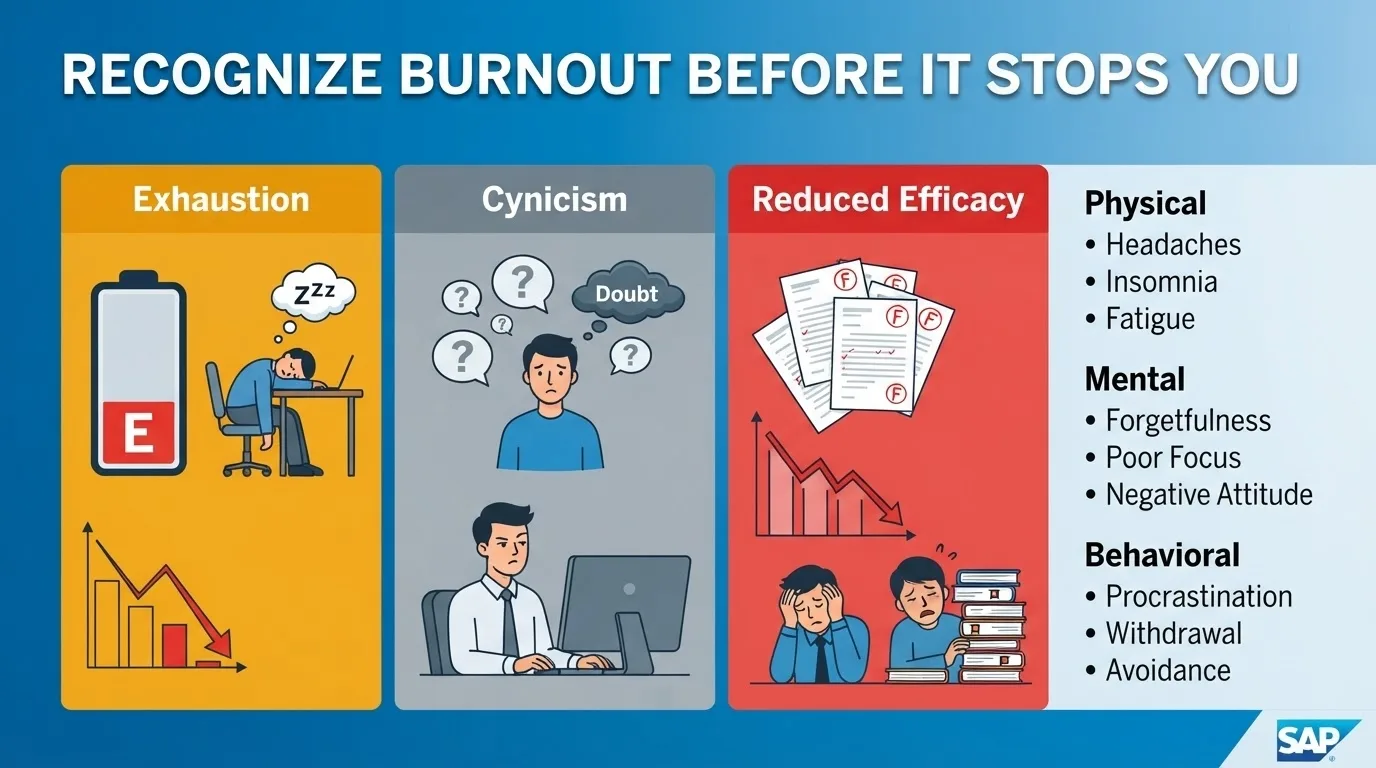
Burnout isn’t just feeling tired; it’s a full-body shutdown triggered by chronic study stress. The World Health Organization calls it a cocktail of three things:
- Exhaustion: You're out of energy, you can't focus, and going over one more page is too much.
- Cynicism: You begin to question what the point of this is, or if any of it matters.
- Reduced efficacy: Suddenly, you’re sure you’ll flunk, no matter how hard you work.
So, how do you know if you’re burned out and not just tired? Watch for these signs:
- Physical: Headaches. Can’t fall asleep. Always tired.
- Mental: Forgetting basic stuff, trouble focusing, can’t remember things that used to come easy.
- Behavioural: Procrastinating, bailing on practice tests, or ghosting your study group.
This article “Master SAP Certification exam without memorization” will help you learn tips and tricks to avoid SAP burnout by suggesting current format based study approaches.
7 Ways to Dodge SAP Study Burnout
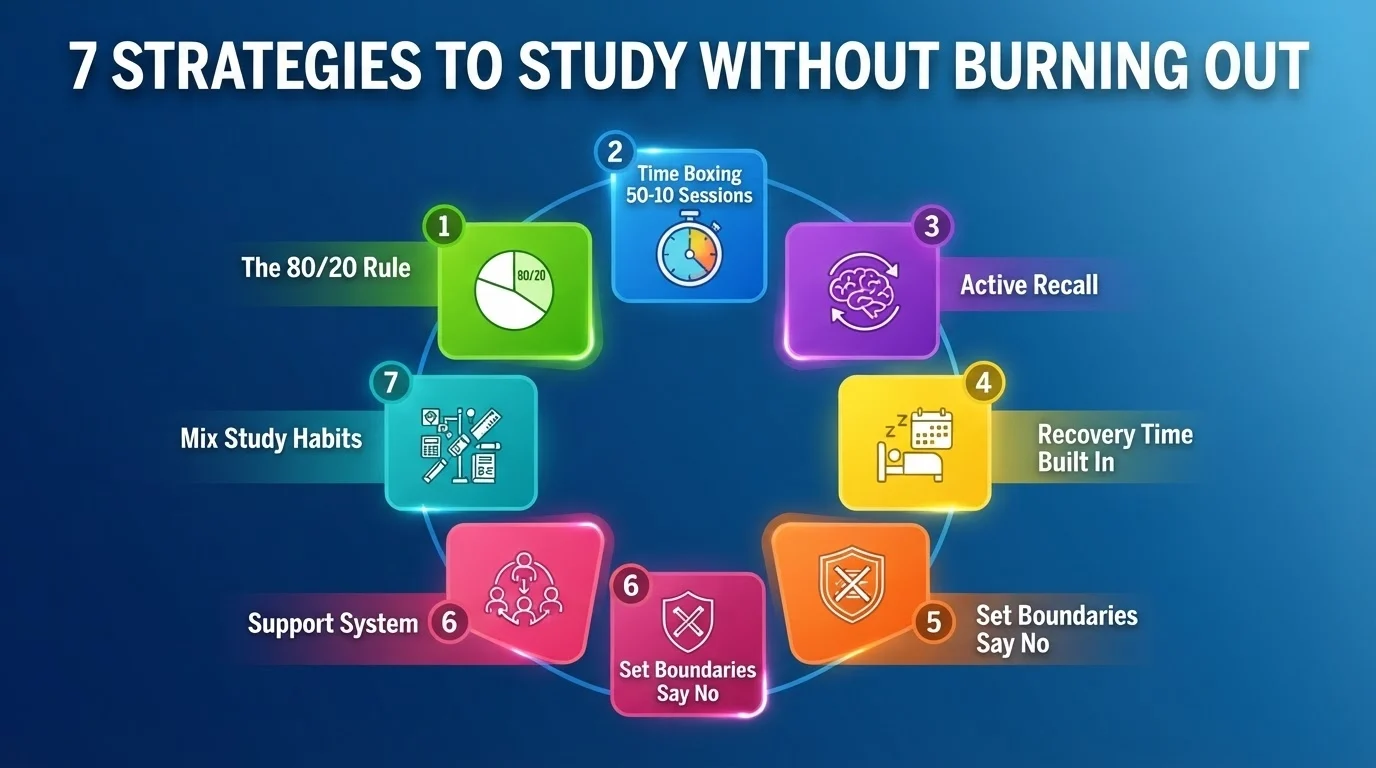
1. The 80/20 Rule: Focus Where It Counts
You don’t need to master every single topic. About 20% of the material is covered by most of the questions on the exam.
- Grab the official SAP exam guide and spot the high-priority subjects.
- See what types of questions repeat across multiple practice tests with The Exam Questions.
- Put most of your 60% time into those core high-impact subjects; give the less common stuff just enough attention to be familiar.
Example: In S/4HANA, stuff like core functions and integration scenarios always show up; bet on those.
2. Time Boxing: 50-10 Sessions
Short, focused chunks of study beat marathon cramming every time.
- Go for 50 minutes of deep focus, then a hard 10-minute break. No screens, no SAP material; just let your brain breathe.
- Repeat for two to three cycles max. Two study blocks a day beats trying to cram all Saturday.
Research says: After 50 minutes, your brain lags. Rest helps cement what you just learned. You might want to try apps like the Pomodoro timer, Forest, or Focus Keeper to keep you on track as well.
3. Active Recall is Better than Passive Reading
Reading SAP docs over and over feels productive, but it is a trap.
Instead:
- Close your books and write out what you remember.
- Spot gaps, then focus only on those areas next session.
For SAP:
- Practice with The Exam Questions and SAP Learning Hub questions, flashcards, or even explain concepts out loud (teaching helps cement knowledge).
- Join community forums and answer questions if you can.
People remember way more with active recall, up to 50% more, actually.
4. Build Recovery Time Into Your Plan
Rest isn’t optional; it’s what keeps your brain sharp.
Day to day:
- Aim for 7–8 hours of sleep (not negotiable for memory or mood).
- Take a 20-minute walk after studying.
- Put your phone down and take a couple of evenings off screens each week.
Each week:
- At least one full day with zero study.
- Do something fun: see friends, work out, whatever lifts your mood.
Pre-exam:
- Take a few days off: light review, no new material.
- Focus on rest, water, and reminding yourself you’re ready.
You can’t cut sleep to add study time and expect to remember anything.
5. Set Limits: Say “No”
It’s hard to say no, especially if you feel like your career is at stake. But protecting your study time is important.
- Tell your family and boss when you plan to study.
- Say no to extra work projects during study time.
- Silence those notifications.
- Skip non-essential plans and save energy for people who lift you.
Try this: “I’m preparing for the SAP exam for the next two months. I’ll have to miss [the event], but let’s catch up after.” Every unnecessary yes means less time for your goals.
6. Build a Support System
Studying alone is tough. Turns out, feeling connected cuts burnout risk in half.
- Join SAP forums, SAP Community and find study groups.
- Network with people on LinkedIn who’ve passed the exam.
- Get an accountability buddy you can check in with weekly.
- Tell friends and family what you’re up to; they’ll support you.
- If you want more structure, get a mentor or a coaching group.
7. Review your Study Habits
Don’t be stuck in a rut. Combine these study modes:
|
Method of Study |
When to Use |
Benefit: Avoiding Burnout |
|
Video courses |
Finding new ideas |
Low cognitive load, engaging |
|
Practical exercises |
SAP sandbox/practice systems |
Active learning breaks the monotony |
|
Weekly progress monitoring |
Gamification, concrete progress |
|
|
Study groups |
Weekly sessions |
Social connection, other perspectives |
|
Handwritten notes |
Chapter summaries |
Kinesthetic involvement |
|
Educating people |
Once you have mastered topics |
Boost confidence, enhance retention |
Tired of your regular study session? Try a different way. If you are in an unworkable situation, you are only creating frustration for yourself.
Cognitive Strategies for SAP Study Stress
- Reframe your thoughts: Instead of “I’ll never pass,” tell yourself, “This is hard, but I’m making progress, just like plenty of others.”
- Set “worry time”: Give yourself 15 minutes a day to list any SAP-related worries, come up with solutions for what you can control, then drop the rest.
- Visualize: Spend a few minutes picturing yourself calmly finishing the exam and getting that badge. It really can help shift your mindset.
Should You Postpone the Exam?
Sometimes, the strongest move is knowing when to slow down. Consider delaying if:
- You’re physically worn out or having panic attacks.
- Your practice test scores are tanking right before the exam.
- You’ve missed big chunks of material.
- Life outside SAP is throwing curveballs you can’t dodge right now.
- You’re simply too exhausted to keep going.
It’s not a failure. It’s a smart reset. SAP lets you take the exam twice per certification bundle better to go in confident than to force it and risk needing to recover from anxiety on top of everything else.
Burnout Recovery: What To Do
If you’re already deep in burnout, powering through will only make things worse. Step back and reset.
Phase 1: Damage Control (Week One)
- Quit studying. Completely. No SAP stuff at all.
- Focus on sleep, good food, walks, anything that relaxes you.
- Do things you enjoy totally unrelated to certification.
Phase 2: Easy Re-Engagement (Weeks 2 – 3)
- When you are ready, try 15-20 minutes per day at most.
- Select the study method you like best, the one you find easiest.
- Stick to low-stress topics first.
- Celebrate small wins. If the burnout symptoms pop up, stop.
Phase 3: Modified Study Plan (Week 4+)
- Ease in using all the burnout prevention tricks above.
- Halve your daily goals.
- If you need to, push your test date back.
- Keep tight boundaries; don’t overload yourself.
To strengthen your System Exam preparation, practice System-based exam tasks.
It usually takes 3–6 months to fully recover from serious burnout, so give yourself grace.
.webp)
Build Your Own Anti-Burnout Plan
So here’s how it all fits together:
First two weeks:
- Know your own burnout symptoms.
- Know exam requirements and schedule
- What are your main topics?
- Gather your study resources and set up your study area.
- Find your support crew.
Every day:
- Stick with the 50-10 method (no more than two sessions).
Every week:
- Take one full day off.
- Go to a study group once.
- Do a practice test.
Each month:
- Check in with yourself, see how you’re doing, review your progress, and tweak your methods.
Watch for red flags. If you notice slumping test scores, dread, or physical symptoms, pause and focus on recovery.
Helpful Resources For Success
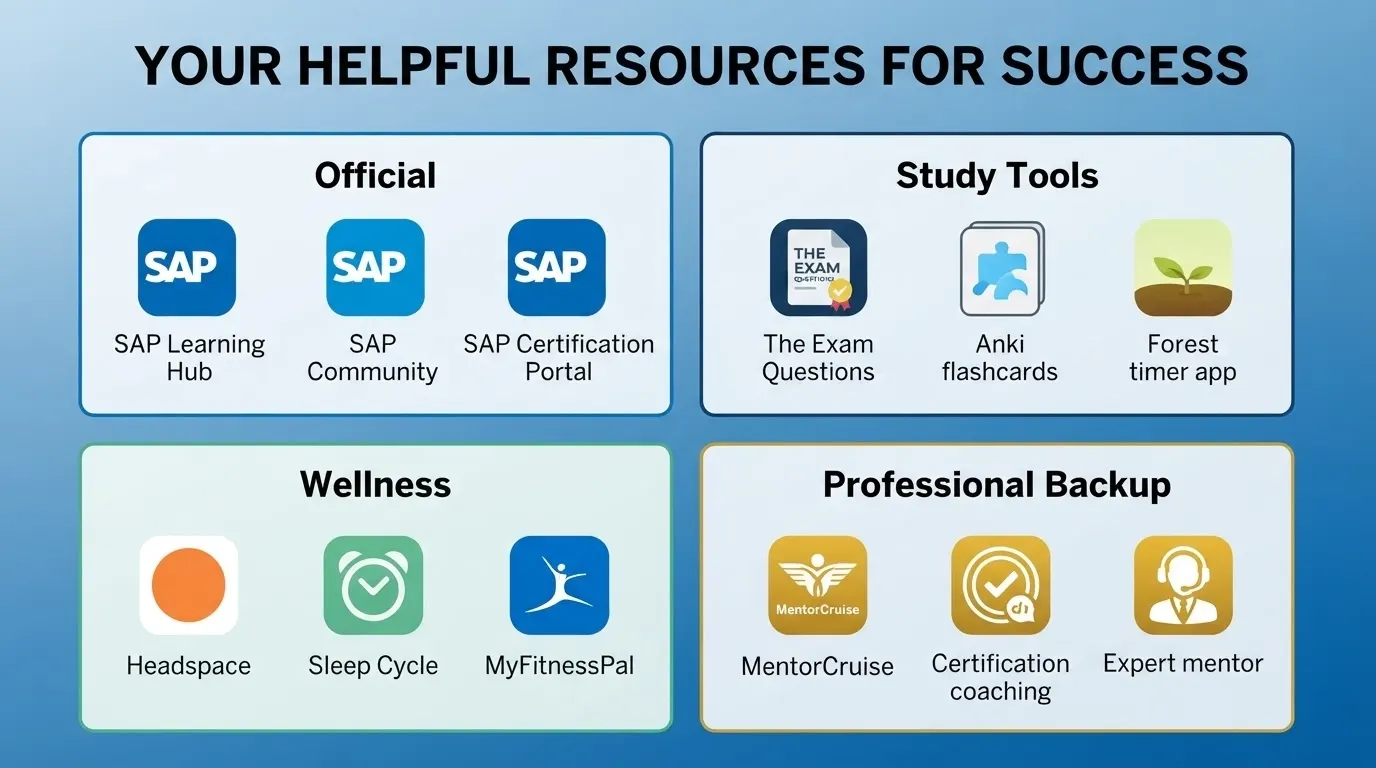
Official stuff:
- SAP Learning Hub –:for guides and practice exams
- SAP Community : forums, advice, study partners
- SAP Certification Portal : all your exam logistics
Study tools:
- The Exam Questions: Practice questions
- Anki : flashcards, spaced repetition
- Forest : Pomodoro timer with fun motivation
Wellness:
- Headspace or Calm: meditation to unwind
- Sleep Cycle: to optimize your rest
- MyFitnessPal: help with nutrition
Professional backup:
- Find SAP mentors (try MentorCruise)
- Certification coaches
- Occupational therapists specializing in study stress
Conclusion: It’s a Marathon, Not a Sprint
Look, your SAP certification is important, but not at the expense of your health. These strategies aren’t just about passing one exam; they’re habits that’ll carry you through your whole career. Every SAP pro whose career you admire? They’ve wrestled with burnout, too; they just figured out how to step back and adapt.
You can handle this. There’s no need to sacrifice your well-being.
Start simple: pick one strategy from the list, use it for a week, and see how you feel. Add another when you’re ready. That badge is waiting, and when you get it, you’ll know you did it the right way without burning out.
You’ve got this. Go take that exam and win.
Get ready for test day with realistic practice and the most current SAP materials. The Exam Questions mirror the real exam, so you know what to expect.