So, you’ve had a nonstop day at work, and now you’re staring at your SAP Learning Hub dashboard, mind completely fried. You can’t help but think, “How am I supposed to study for this exam?”
The reality? Most SAP certification candidates are in the same boat: full-time jobs, crammed schedules, exhaustion. Over 70% are working professionals, and the failure rate ranges from 30-50%. More often than not, folks give up before even sitting for the test.
But here’s what nobody says out loud: You don’t need to give up your nights, social life, or drop thousands on some gruelling bootcamp. You don’t need to study for four hours every day either. What you really need is a smart, workable system that fits your actual life.
That’s what this guide is all about. I’ll show you how to get SAP certified as a full-time worker with a plan I’ve seen help hundreds of other busy professionals pass in just 6-8 weeks without burning out. Let's get into it.
Why SAP Certification Still Counts in 2026
Let’s be honest, is it really worth the sweat to get SAP certified?
Here’s what’s happening:
- SAP S/4HANA certs are super in-demand right now, thanks to the big 2027 migration deadline.
- Certified folks make good money, think around $164K a year in top markets.
- Companies seriously need experts in SAP BTP, SAP Analytics Cloud, and, yeah, S/4HANA.
- Having an official certificate? It makes you stand out in a crowd of candidates.
Bottom line: SAP skills aren’t on their way out; they’re heating up, especially with more cloud solutions and AI rolling in. But you still need that certificate to prove you’re not just all talk.
The 10-Hour Weekly Blueprint: How Real People Study
Every SAP study guide out there tells you to put in “2-3 hours every night.” Let’s be honest: for anyone clocking 40+ hours a week, that’s fantasy.
This is what really works.
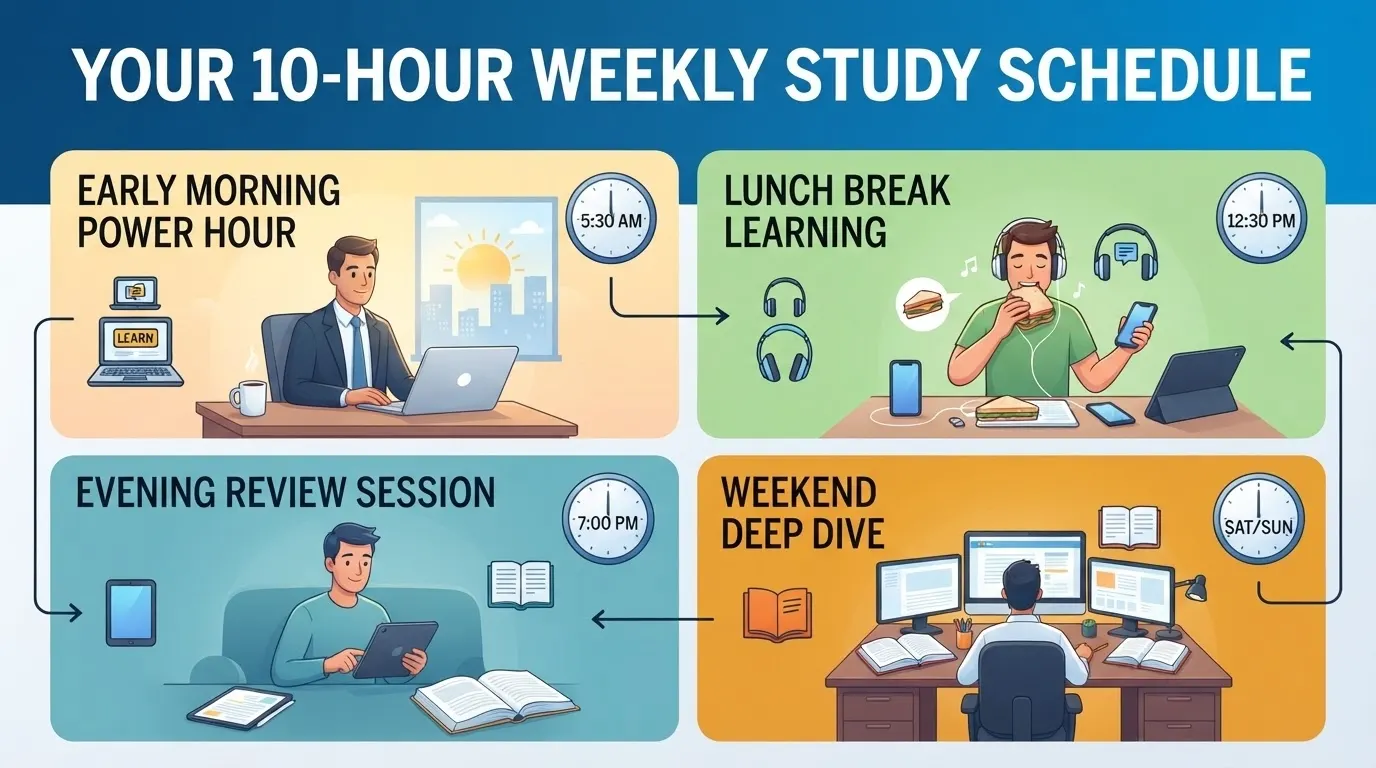
Time-block your study with small, focused sessions, you can actually stick to:
- Morning Power Hour: One hour before work, say 5:30–6:30 AM.
- Lunch Learning: Half an hour on your break.
- Evening Review: About an hour after dinner, maybe 8:00–9:30 PM.
- Weekend Deep Dive: 3-4 hours on Saturday or Sunday.
Add it all up, and you’re at 10-12 hours a week a lot more doable than long nightly grinds.
Discover: How to Master SAP Without Memorization
Here’s the trick: This approach uses spaced repetition, which science backs as one of the most reliable ways to actually retain what you learn. No more cramming, just real understanding.
Step 1: Pick the Right SAP Certification for You
No two SAP certifications are created equal. (And not every one will help your career the same way.)
The smartest move? Pick a certification tied to your current role. That way, study feels way more like investing in your day job, not just a side hustle.
Top Certifications for 2026:
|
Certification |
Best For |
Study Time |
Exam Duration |
|
SAP S/4HANA Cloud Public Edition, Financial Accounting |
Finance & accounting professionals |
2-4 months |
180 minutes |
|
SAP Business Network Supply Chain |
Supply chain & procurement roles |
2-3 months |
180 minutes |
|
SAP S/4HANA Cloud Public Edition, Sales |
Sales & customer management |
2-3 months |
180 minutes |
|
Developers & programmers |
6-8 weeks |
180 minutes |
|
|
Solution Architect - SAP BTP |
Cloud platform specialists |
8-10 weeks |
180 minutes |
Pro move: Stick to what you know. You’ll pick things up faster, and all the jargon will make sense.
Step 2: Resources: Gather Only What You Need
You could spend a fortune on courses, but there’s no need if you’re smart. Prioritize these:
1. SAP Learning Hub (Official Stuff)
- Costs about $1500/year, but it’s gold if your company covers it.
- You receive official courses, practice systems, and guided learning experiences.
2. SAP Documentation and Community
- Free, with lots of real-world tips and stories from people who’ve been there.
3. Practice Exams
- $19.99 will get you a realistic mock exam.
- Can’t skip this. Practice tests are what tip passers over the edge.
4. YouTube & Free Tutorials
- Free, visual, and straight to the point. Check out SAP Learning & The Exam Questions YouTube
5. SAP PRESS Certification Guides
- $60-100 per book, deep dives and practice Qs.
- Not a must if you're on a budget, but great if you can afford it.
Step 3: Set Up Your Study Plan (Not Just a Hopeful Schedule)
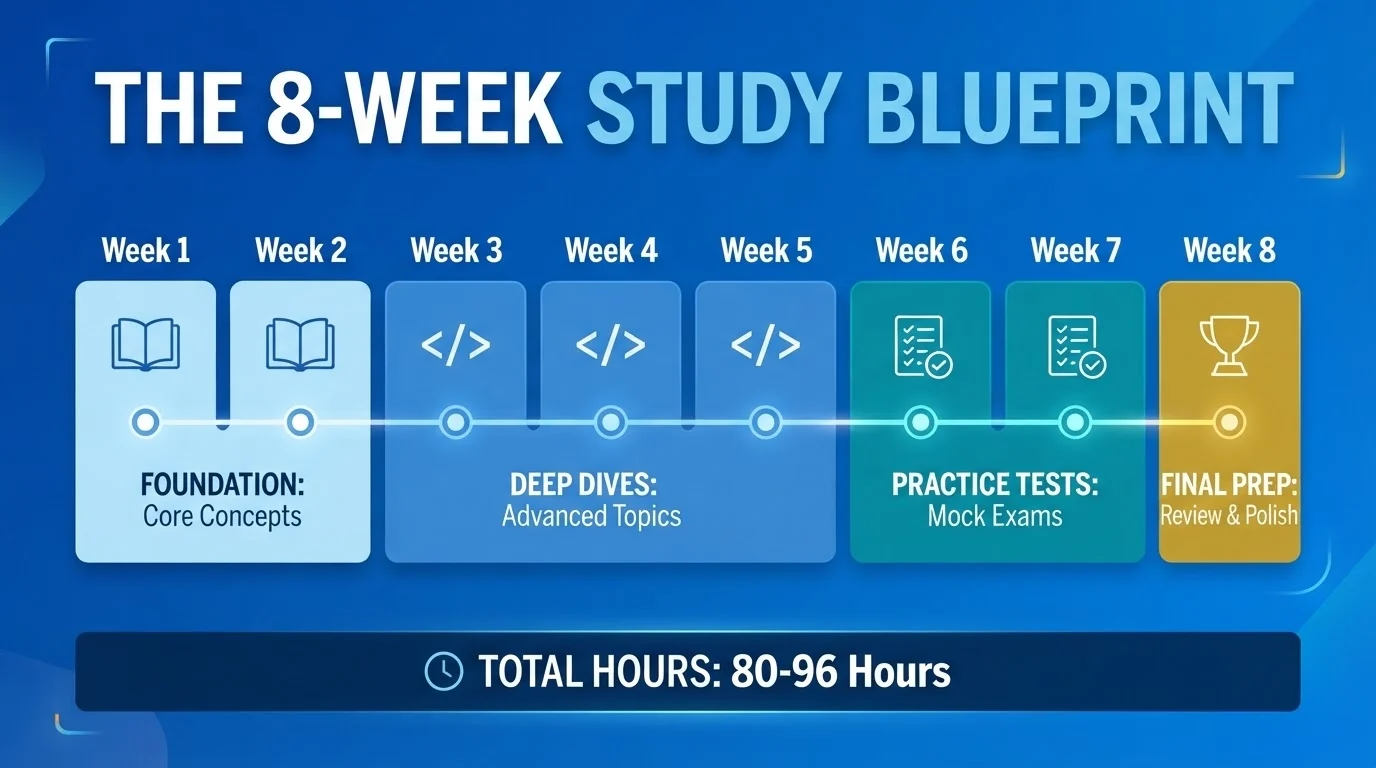
Here’s an 8-week SAP study plan built for people with real jobs:
Weeks 1–2: Foundation
- Learn the exam format.
- Watch overview vids.
- Read the official docs.
- Take a baseline practice test to spot weak spots.
- Time: 8 hours/week
Weeks 3–5: Deep Dives
- Knock out SAP Learning Hub modules (2-3 a week).
- Get hands-on in a practice environment.
- Make flashcards for tough terms.
- Time: 10-12 hours/week.
Weeks 6–7: Practice Tests & Application
- Take one full practice exam each week.
- Study every wrong answer carefully.
- Revisit your problem areas.
- Time: 10-12 hours/week.
For practice texts, you can utilise resources from Course based Practice Questions.
Week 8: Final Prep
- Do 2–3 more practice exams.
- Review all notes and cards.
- Make sure you’re rested; sleep matters!
- Time: 8-10 hours/week.
All in, that’s 80–96 hours spread out over 8 weeks. Got some SAP experience already? You might finish in 6.
Step 4: Squeeze in for Micro-Learning
Here’s the secret: Use the little moments in your day.
Turn downtime commute, lunch, before bed into study time:
- Commutes: Quick flashcard guide, watch short videos.
- Lunch: Short quizzes or a little reading (15-30 min).
- Before bed: Quick review (it actually strengthens your memory).
- Weekend mornings: Long, intense focus sessions must be done (2-3 hours tops).
Tools to use:
- Anki or Quizlet for flashcards.
- Notion/Evernote for organizing notes.
- YouTube Premium for offline video.
It’s not the long marathons that count. It’s the consistency; 30 minutes a day wins out over random, stressful, late-night cramming.
Step 5: Active Learning Techniques (Don’t Just Read and Hope)
Most people just read and hope for the best. That’s not enough for SAP.
Here’s how to actually master it:
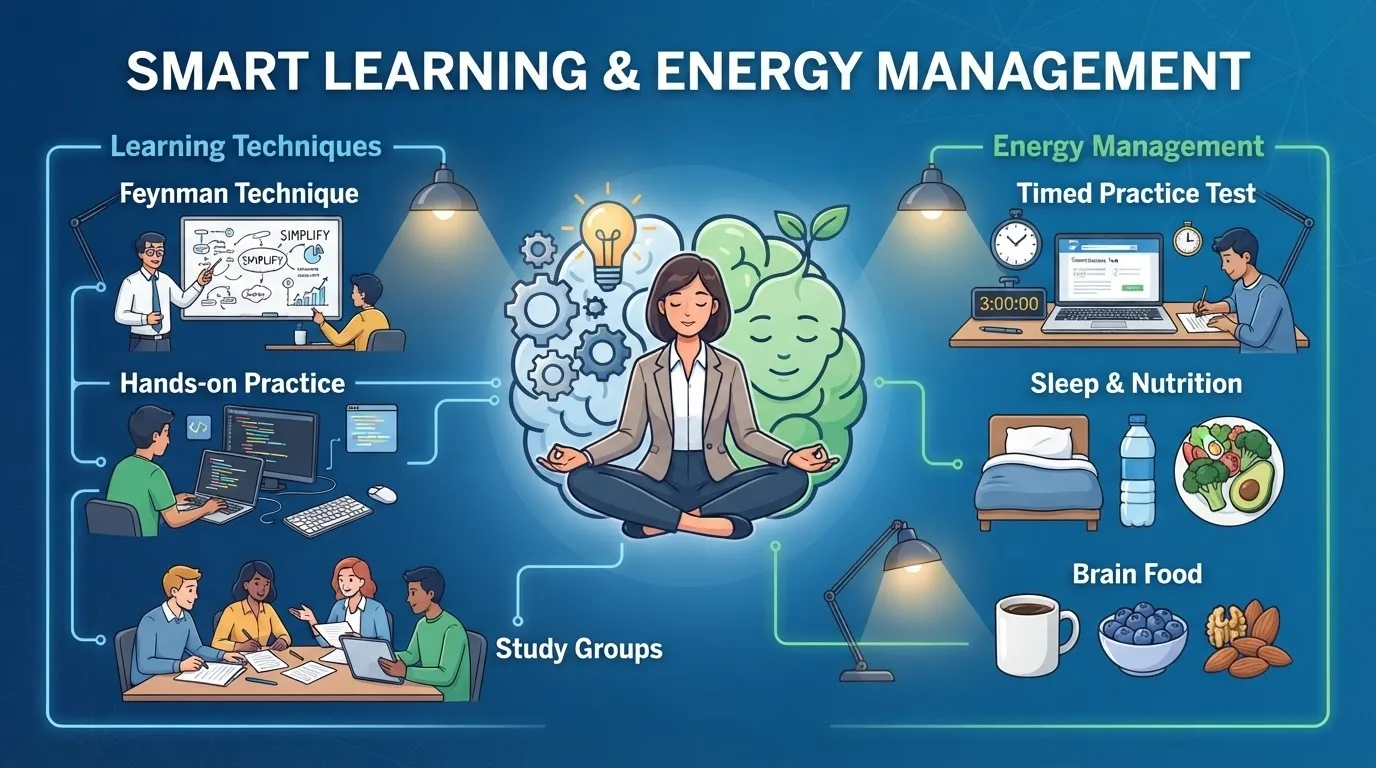
1. Feynman Technique: Choose an SAP concept and if you are not able to explain it, you don't really understand it.
2. Practice: This is a must-have. Certifications now focus on your ability to use SAP, not just theory.
- Use the Learning Hub’s practice systems.
- Sign up for SAP’s free trials.
- Try your company’s sandbox, if you’ve got one.
3. Realistic Practice Tests:
- Set a timer for 3 hours (just like the real thing).
- Don’t get distracted.
- Use reference materials; SAP exams allow open books now.
4. Study Groups & Forums:
- Reddit (r/SAP), LinkedIn groups, SAP forums.
- Explaining things to someone else locks that info in your brain.
Step 6: Manage Your Energy (Not Just Your Calendar)
Plenty of guides focus on study hacks, but nobody talks about energy. That’s what really derails people.
How to keep yourself sharp:
- Tackle hard topics when you’re most alert (usually mornings).
- Save lighter stuff for when you’re wiped out.
- Use caffeine smartly: morning coffee is great, but skip it after 2 PM.
- Take ten-minute walks between study sessions; simple, but it boosts memory.
- Sleep: You need 7-8 hours. Seriously. Sleep is the glue that keeps new information in your head.
- Eat for your brain: Go for omega-3s, blueberries, nuts. Heavy meals? Save them for after you’ve studied.
Step 7: Nail Exam Day
You made it to exam day. Here’s how not to trip at the finish line:
Before:
- Schedule the exam for a Friday or Monday (when work drama is at a minimum).
- Sleep a full 8 hours.
- Eat a solid breakfast: protein + good carbs = brain fuel.
- Arrive early so you’re not rushing (or check your tech in advance if it’s online).
During:
- Read each question carefully; SAP likes their trick wording.
- Flag any head-scratchers and come back later.
- Use your open book wisely; have bookmarks ready, don’t go hunting mid-exam.
- Trust your gut unless you’re 100% wrong.
After:
- Results come instantly, so don’t stress the wait.
- If you fail? You’re not alone. Figure out your weak points and try again.
- If you pass? Celebrate. Post on LinkedIn. Let yourself feel proud you earned it.
Mistakes Most People Make (and How to Steer Around Them)
Here’s how to sidestep the biggest SAP study landmines:
- Don’t start without a mapped-out plan. Use the blueprint above; no shortcuts.
- Don’t just passively read. You have to practice in a real SAP environment.
- Don’t skip practice tests. They’re what show you where you stand.
- Don’t study when you’re completely drained. Short, focused bursts always beat slogging it out.
- Don’t do it alone. SAP community is full of tips, advice, and moral support.
Keeping Your Motivation Alive
Weeks 4–5 are brutal. Most people quit here because life gets in the way, excitement fades, and it all feels too slow.
How to push through:
- Make your goal visual: Print out why you’re doing this and put it somewhere you’ll see every day. Better salary? Promotion? Write it down.
- Track your hours in a spreadsheet or app; watch that progress bar fill up.
- Reward yourself along the way. Week 3 done? Order in your favourite food. Passed a mock exam? Take Sunday off.
- Find an accountability partner. A friend or coworker also studying can push you through the tough spots.
- Remember why you started. Certification isn’t a piece of paper; it’s a career lifeline.

What's Next:
You have the blueprint. You want to do this now:
1. Select the SAP Certification you are interested in.
2. Block out your 10 hours a week in your calendar.
3. Sign up for the Learning Hub (or pull together free resources).
4. Take a baseline practice test to see where you’re starting.
5. Follow the 8-week plan. Stick to it.
Conclusion
This isn’t about being the smartest. It’s about consistency. Thousands of working pros have done it, and you can, too.
Time to get started. Your future self is waiting, and you’ll be glad you did it.
Prep like a pro with The Exam Questions: updated SAP questions, practical system tasks, in-depth study guides, and realistic practice exams all streamlined for you.