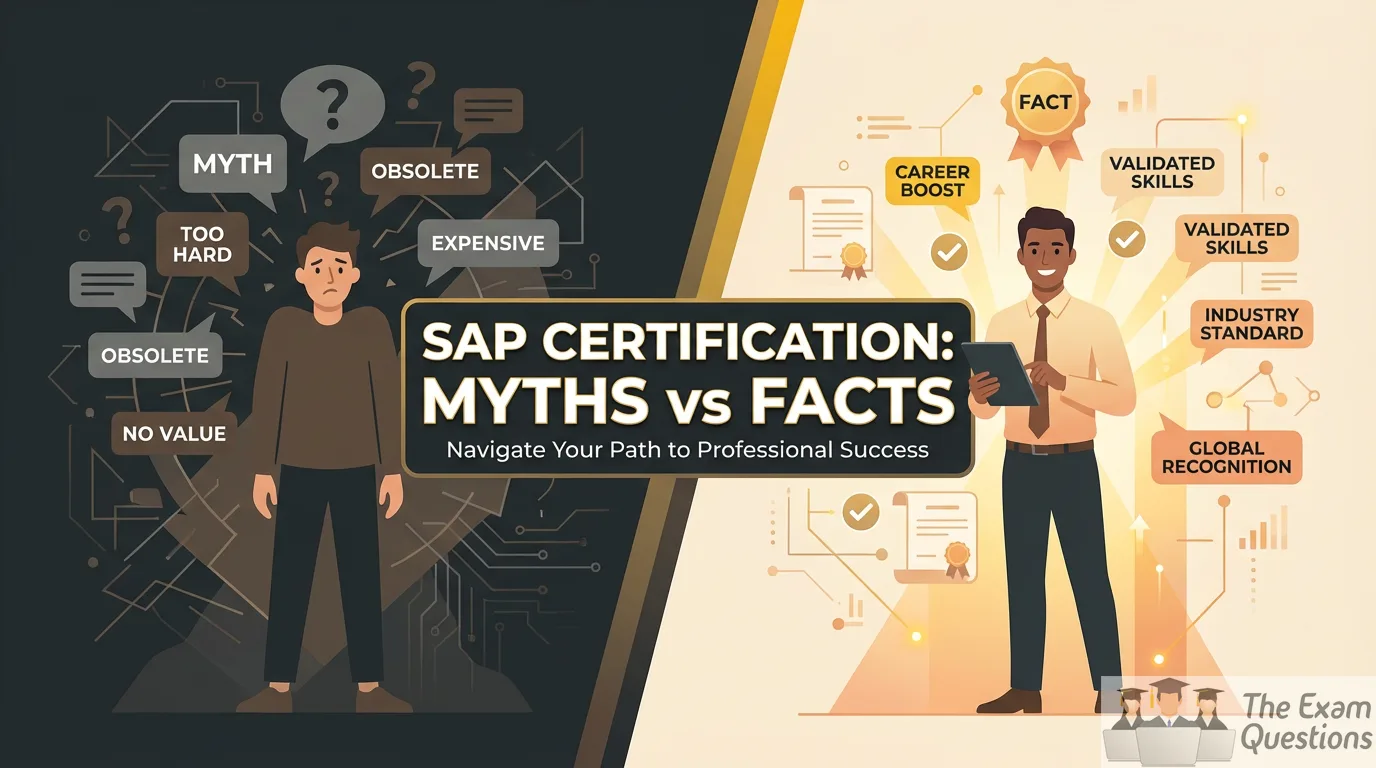
You're thinking about SAP certification, but the rumors are stopping you in your tracks.
"It's too expensive." "You need years of experience first." "They expire and become worthless." Sound familiar?
Here's the deal:
Most of what you've heard about SAP certifications is either outdated, exaggerated, or flat-out wrong. And these myths are costing professionals like you thousands in lost salary potential and career opportunities.
I've been through the SAP certification journey myself, and I'm about to show you the real facts backed by current data, salary statistics, and the latest 2025-2026 requirements. By the end of this article, you'll know exactly what's true, what's fiction, and how to make SAP certification work for your career.
Let's crush these myths one by one.
Myth #1: "You Need Years of SAP Experience Before Getting Certified"
The Fiction:
Many aspiring SAP professionals believe they must work with SAP systems for 3-5 years before they're "qualified" to attempt certification exams.
The Facts:
SAP has no mandatory experience requirement for most certifications.
While SAP recommends practical experience (typically 1-2 years for professional-level certs), you can register and sit for certification exams without any prior SAP work experience.
Here's what actually matters:
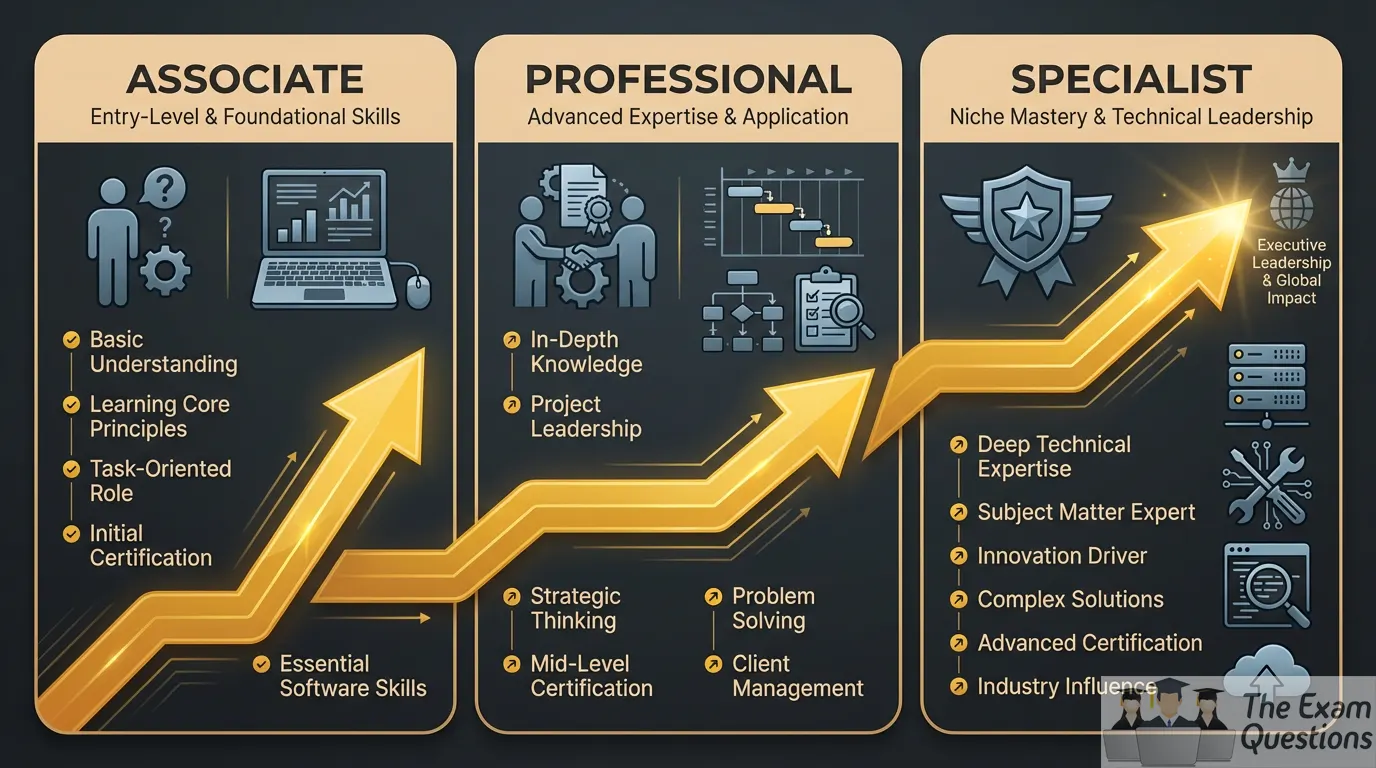
- Associate-level certifications: Designed for beginners with basic SAP knowledge
- Professional-level certifications: Recommended after project experience, but not mandatory
- Free learning paths: SAP Learning Hub provides hands-on system access without needing an employer's SAP environment
- Exam Questions: Get your practice exam questions and prepare.
Want to know the best part?
Many successful SAP consultants get certified before landing their first SAP role. The certification itself becomes the credential that opens doors to entry-level positions.
Bottom line: Don't wait for experience to get certified. Get certified to gain experience.
Myth #2: "SAP Certifications Are Way Too Expensive"
The Fiction:
You'll hear people say SAP certifications cost "thousands of dollars" and aren't worth the investment.
The Facts:
Let's break down the real costs (as of 2026):
|
Cost Component |
Price Range |
|
SAP Certification Exam |
$220 - $560 USD |
|
Optional Training Course |
$1,500 - $3,500 USD |
|
SAP Learning Hub Subscription |
$219 - $449/month |
|
Stay Certified Assessment (annual) |
FREE |
Total for self-study certification: $220 - $560
Now compare that to the return on investment:
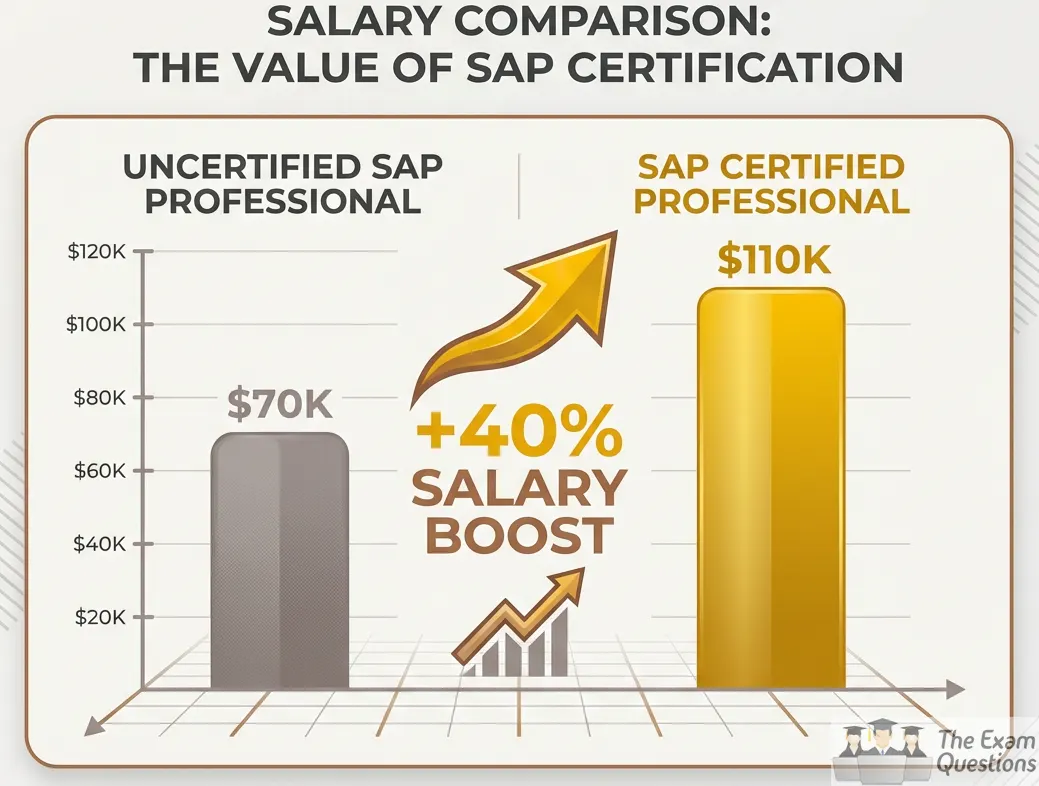
According to 2025 industry data, SAP-certified professionals earn 20-40% more than their uncertified counterparts:
- SAP Consultant: $90,000 - $130,000/year (certified)
- SAP Project Manager: $120,000 - $180,000/year (certified)
- SAP S/4HANA Specialist: $136,000 - $200,000+/year (certified)
You might be wondering:
"Is $560 expensive for a 40% salary increase?"
The math is simple: If certification helps you land a role paying even $10,000 more annually, you've recovered your investment in less than a month.
Myth #3: "SAP Certifications Expire and Become Worthless"
The Fiction:
"I heard SAP certifications expire after a year and you have to retake the entire exam. It's a money grab!"
The Facts:
Yes, SAP introduced a new certification model in April 2024 that changed how validity works. But here's what they don't tell you:
Current Certification Rules (2026):
✅ Certifications ARE valid for 12 months
✅ You do NOT retake the full exam to renew
✅ Renewal uses short "Stay Certified" assessments
✅ Assessments are FREE, not proctored, with unlimited attempts
✅ Dedicated course materials are provided for preparation
Here's the kicker:
This new model actually keeps your skills current rather than letting certifications become outdated. In the fast-evolving SAP ecosystem (especially with S/4HANA migrations accelerating toward the 2027 deadline), annual refreshers ensure you stay relevant.
Important dates to remember:
- Certifications issued before April 2024 were extended until March 31, 2025
- All certifications now follow the 12-month validity cycle
- You receive notifications before your certification expiration date
Bottom line: Your certification doesn't become "worthless" after a year - it evolves with you through simple, free assessments.
Myth #4: "You Can't Get Certified Without Expensive Formal Training"
The Fiction:
"You must pay for official SAP training courses through authorized partners to qualify for certification."
The Facts:
While some regions previously required formal training documentation, most SAP certifications globally no longer mandate attendance at paid training courses.
You have multiple preparation paths:
1. Self-Study (Budget-Friendly)
- Free SAP Learning Journeys available on SAP Learning
- Community resources and study guides
- YouTube tutorials and documentation
- Cost: $0 - $560 (just the exam fee)
2. SAP Learning Hub (Recommended)
- Access to live SAP systems for practice
- Comprehensive course materials
- Hands-on scenarios
- Cost: $219 - $449/month + exam fee
3. Formal Training (Comprehensive)
- Instructor-led courses
- Structured curriculum
- Networking opportunities
- Cost: $1,500 - $3,500 + exam fee
Now:
The best choice depends on your learning style and budget - not SAP requirements. Many professionals successfully certify using free resources combined with hands-on practice.
Myth #5: "Certifications Don't Actually Help Your Career"
The Fiction:
"Employers don't care about certifications. They only want real-world experience."
The Facts:
Let's look at hard data from 2025:
📊 By the end of 2025, over 50% of SAP professionals are expected to hold at least one active certification (Source: Expert Links research)
📊 64% of companies are migrating to S/4HANA by end of 2025, creating massive demand for certified talent
📊 SAP S/4HANA certifications are among the most in-demand skills due to the 2027 ECC support deadline
But here's what certification really does for you:
✅ Validates competency when you lack extensive work experience
✅ Gets past HR filters and applicant tracking systems
✅ Demonstrates commitment to professional development
✅ Provides global recognition across industries and countries
✅ Opens doors to remote opportunities and contract work
✅ Accelerates promotion timelines within organizations
You might be wondering:
"Does certification guarantee a job?"
No. But it significantly improves your odds. Think of certification as your ticket to the interview, where your skills and personality close the deal.
Myth #6: "All SAP Certifications Have Equal Value"
The Fiction:
"Just get any SAP certification and you'll be golden."
The Facts:
Not all certifications deliver the same career ROI.
Here's the deal:
As of 2026, these are the highest-value SAP certifications based on demand and salary potential:
|
Certification |
Average Salary |
Why It's In Demand |
|
SAP S/4HANA Finance (FICO) |
$90K - $140K+ |
Core financial module, universal need |
|
SAP S/4HANA Cloud Architect |
$136K - $200K+ |
Cloud migration surge |
|
SAP BTP (Business Technology Platform) |
$126K - $192K+ |
AI and integration focus |
|
SAP GRC (Governance, Risk & Compliance) |
$100K - $158K |
Security and compliance requirements |
|
SAP ABAP Cloud Development |
$90K - $160K |
Custom development always needed |
Strategic insight:
Focus on certifications aligned with:
- The 2027 S/4HANA migration deadline (massive demand)
- Cloud and AI technologies (future-focused)
- Your industry or career goals (manufacturing, retail, finance, etc.)
Myth #7: "The New Certification Format Is Harder and Designed to Fail People"
The Fiction:
"SAP made certifications harder with the new AI-enabled, open-book format. They're trying to fail more people."
The Facts:
Starting in November 2025, SAP rolled out next-generation certification exams with:
✅ AI-enabled tools available during the exam
✅ Open-book format with access to documentation
✅ Performance-based scenarios testing real-world problem-solving
✅ Real-world challenges instead of pure memorization
But here's the kicker:
This format doesn't make certifications "harder" - it makes them more relevant. You're tested on what you can actually do, not what you can memorize.
Think about it:
In real SAP consulting work, you have access to documentation, support resources, and AI tools. The new format mirrors actual working conditions, making certified professionals more job-ready from day one.
Bottom line: The new format rewards practical skills over rote memorization - exactly what employers want.
The Truth About SAP Certification Success
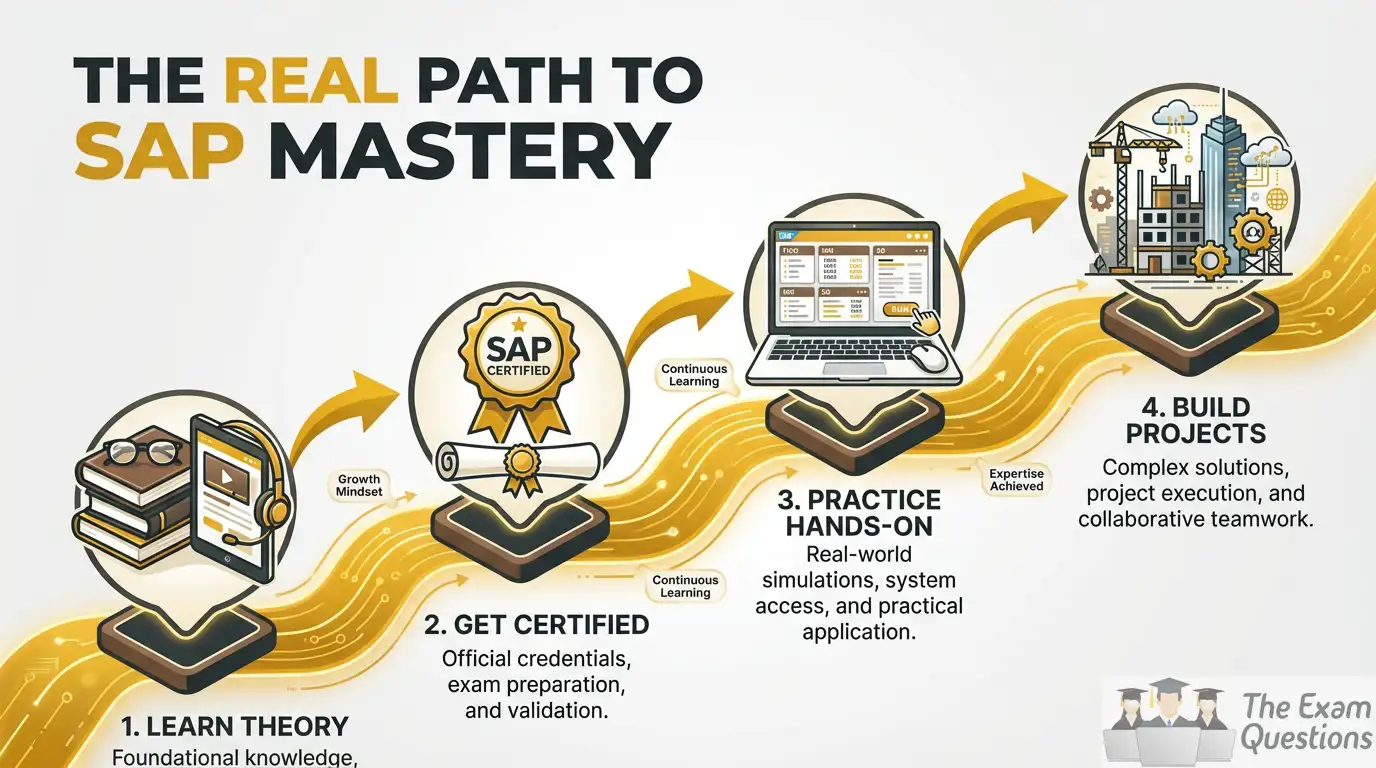
After debunking these seven myths, here's what the real success formula looks like:
What Actually Matters:
- Choose the right certification for your career goals and market demand
- Study strategically using free learning journeys and hands-on practice exams
- Take the exam when you're ready (no arbitrary experience requirement)
- Stay certified annually through free assessments (keeps skills current)
- Combine certification with networking and portfolio building
- Focus on S/4HANA and cloud technologies to ride the 2027 migration wave
What Doesn't Matter:
❌ Waiting years before attempting certification
❌ Spending thousands on training if you're self-motivated
❌ Worrying about annual renewals (they're free and simple)
❌ Getting every certification available (strategic selection wins)
Taking Action: Your Next Steps
Now that you know the facts, here's how to move forward:
Step 1: Identify Your Target Certification
- Visit SAP Learning Certification Directory
- Filter by your interest area (Finance, Supply Chain, Cloud, Development)
- Review exam details, sample questions, and learning paths
Step 2: Access Free Preparation Resources
- Complete the free SAP Learning Journey for your chosen certification
- Join SAP Community forums for peer support
- Practice with questions on TheExamQuestions
Step 3: Register and Schedule Your Exam
- Create an SAP Learning Hub account
- Purchase your exam voucher ($220-$560)
- Schedule at your convenience (remote or test center)
Step 4: Stay Certified Annually
- Mark your calendar 60 days before expiration
- Complete the free Stay Certified assessment
Access provided preparation materials beforehand
Final Thoughts: The Real Value of SAP Certification
Let's be crystal clear:
SAP certification isn't a magic wand that instantly transforms your career. But it is a strategic investment that:
- Validates your skills when experience is limited
- Increases earning potential by 20-40%
- Opens doors in a market desperate for S/4HANA talent
- Keeps you current through annual assessments
- Provides global recognition and mobility
The myths surrounding SAP certification have held back countless talented professionals from pursuing opportunities that could change their lives.
Don't be one of them.
Now that you know the facts, you have everything you need to make an informed decision about your SAP certification journey.
Ready to Get SAP Certified?
Start your certification journey today with our comprehensive SAP certification preparation resources:
[Explore Our SAP Certification Resources →]
Don't let myths hold you back from the SAP career you deserve. The 2027 migration deadline is creating a once-in-a-generation opportunity for certified professionals - and the clock is ticking.